Sunday 23 August
What a treat I have had today! For Christmas, the kids bought me a raptor experience day for two. An early start for me and my mate Pete as we finally got to do it this morning down in south Essex.

We got close to about half a dozen birds, some we got to see, others flew to us from a perch. First was a female Barn Owl, she was everything I anticipated. Graceful, quiet, serene (for a hunter). I am yet to see one in the wild but will do in time. It was so light and is mostly feather. This one had been found as a chick with a head injury. It would have perished if left. But here it was, flying, feeding and perching on my gloved hand.
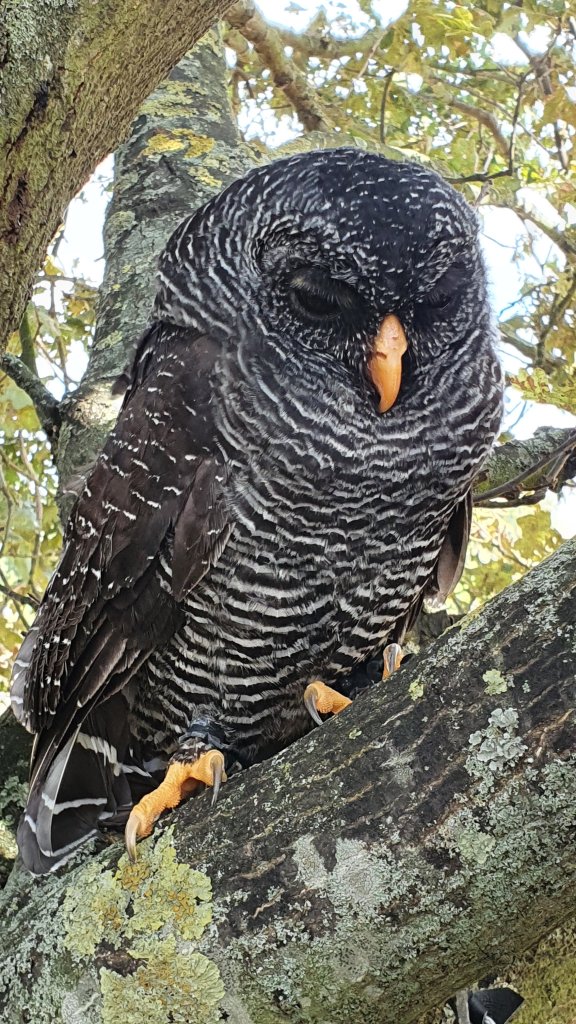
Many of these birds have usually ended up in the care of this, and other bird of prey centres, because they were injured, abandoned from captivity or because they became unwanted pets. Pets!? How can anyone think that keeping one of these wild creatures as a pet is a sensible thing to do?
I have to admit that I did feel a little mixed about being there though. Our expert guide clearly has a love of the birds and a passion for the subject. They spend a lot of time in schools educating young people about the birds and the need for us all to protect their habitats and the environment generally. It must cost a lot of money to do so; I guess these experience days help fund their educational work. But, despite being mesmerised and in awe of simply being with these fantastic creatures, I occasionally felt awkward about their captivity though. They are exercised daily and treated very well, but they are transported in the back of a transit van, albeit very professionally and safely. And they are not free to fly and hunt as they are designed to.

When I was a little boy we had a budgie. It lived in a cage. It was beautiful and I remember gazing between the bars at it’s features. The nobbly bit above it’s beak (cere) where it’s nostrils were located, it’s scrawny feet and claws and it’s brightly coloured plumage. I watched it’s mannerisms, how it would scuttle along it’s perch from end to end and how it’s head would bob up and down. Way back then, I don’t recall giving it any thought whether it would be happier outside of the cage. However, I do know that being able to study our pet bird at such close quarters started my love of birds. But we thought it was a little bonkers, it’s behaviour became eccentric and odd. I can only imagine that was because it was kept, on it’s own, in a cage.
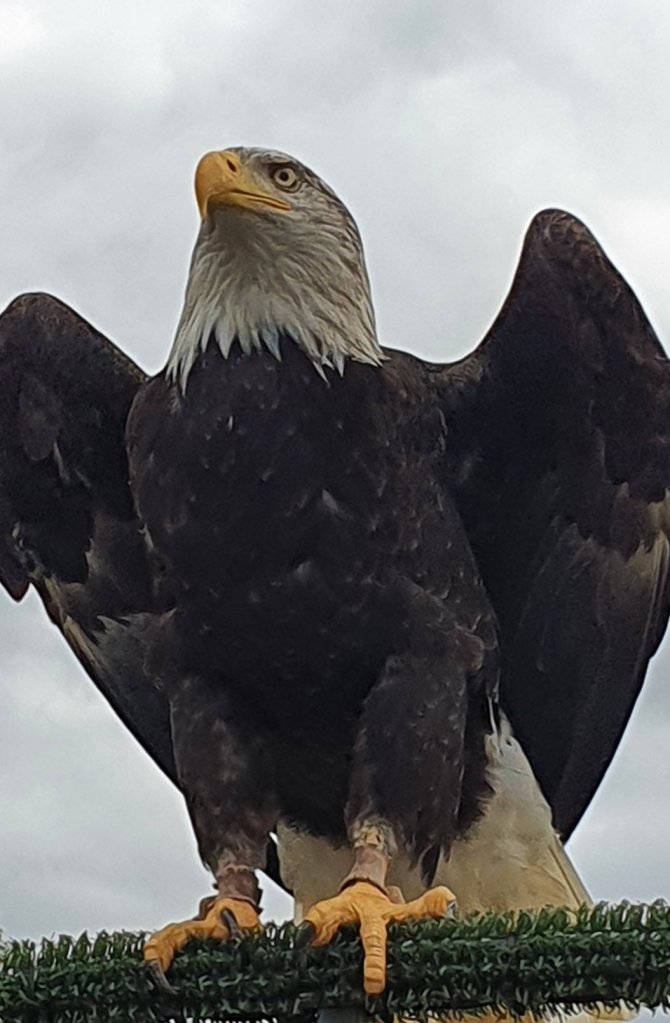
So, this amazing collection of birds, that are ferried around for folk to ‘experience’ (especially young people) has to be a good thing? In the past these birds may have been destroyed, whereas today they educate us. The focussed message must always be to protect them and their natural habitats in the wild. Any birds that end up rescued and captive must be able to educate and inspire not simply entertain.
Oh, and don’t raptors have the coolest Latin names?
 The Bald Birder