
Friday 28 August
I have spent the day at home and, because the weather has calmed, have been taking moments outside in the back garden. In between the occasional thundery downpour.
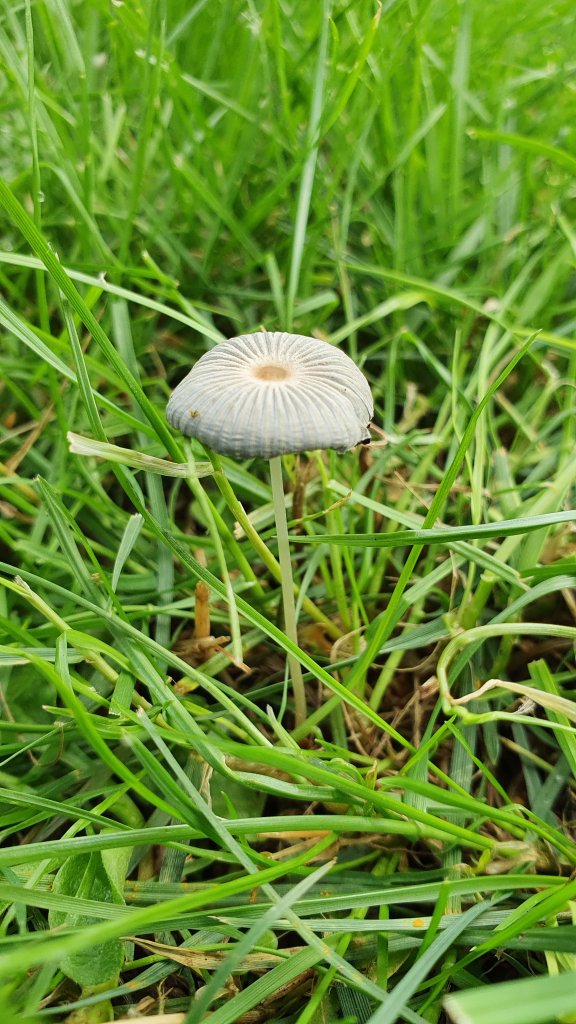
I found a solitary mushroom in the lawn this morning. Glad that I did because they apparently pop up after rain and are gone within 24 hours. It is part of the Inkcap family. In fact, I went out less than an hour after this photo had been taken, after a rain shower, and it was pretty much gone.
I also spent some time watching and listening to the bees around the flower beds. It is really easy to tell the difference between bumblebees and honey bees by the sound of their buzzing. Bumblebees are much lower-pitched than honey bees to start with, but they also hang around on the flowers for longer. The honey bees, on the other hand, can’t seem to sit still for too long. They are constantly flitting from flower to flower using up so much energy. Bumblebees are bigger so perhaps cannot expend the same amount of energy.
On the subject of honey bees, I read a remarkable fact about them this morning. This summer, in particular, they have been invaded by the Eurasian hornet – an amazing creature in its own right but a real threat to the bees and their hives. The honey bees sting is barbed, so when they use this, not only do they leave the sting behind but they also leave part of their digestive tract, nerves etc. That’s the end of the bee. A hornet’s body is also pretty impossible to penetrate.
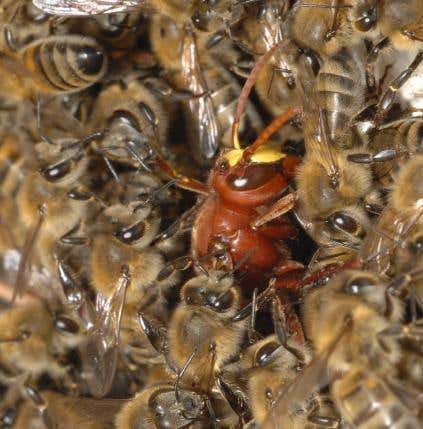
Instead, they crowd the hornet in a mass scrum completely smothering it. I would love to think that one of them shouts ‘pile-on’ like we did when we were kids. This prevents it from alerting other hornets of its distress. The bees now do something incredible; in their numbers, they start vibrating in unison to such an extent that they generate heat, enough heat to ‘cook’ the hornet to death. Wow.
My window of wonderful keeps giving. I just need to keep looking.
 The Bald Birder