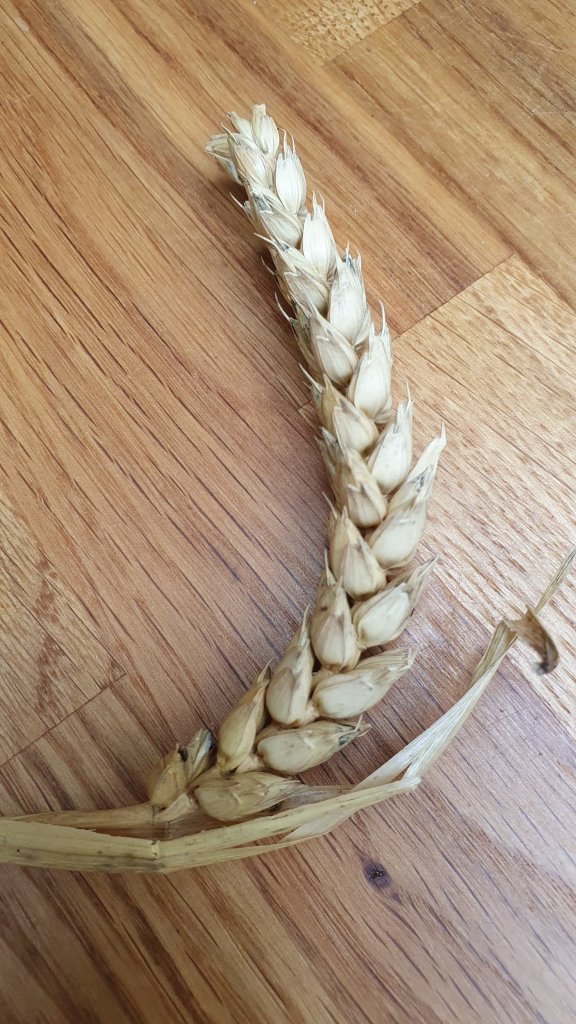
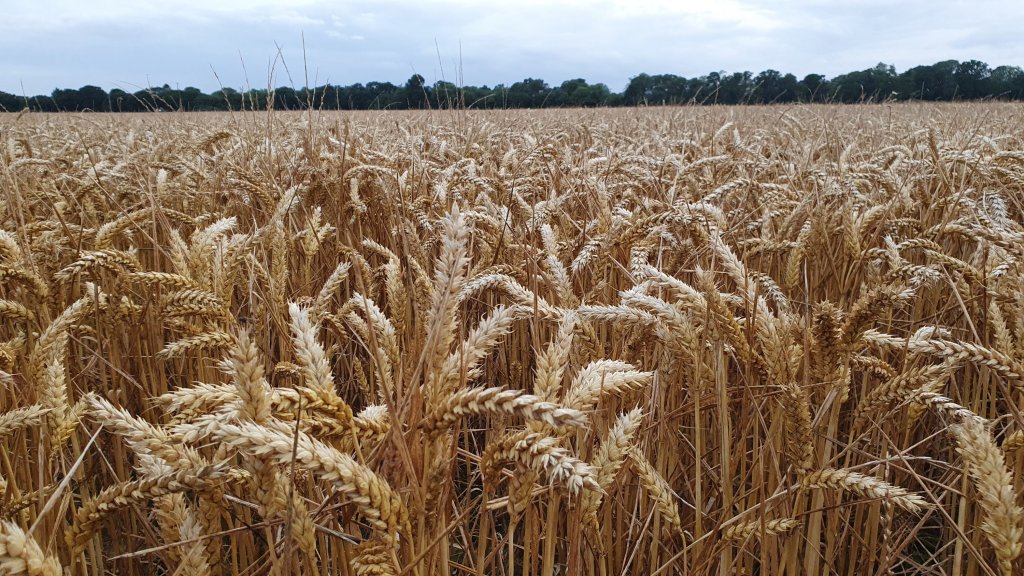
The barley is pretty much ripe for harvesting. Picked this sprig on our walk yesterday evening. It’s quite perfect really.
9.55 am I started the day with a run. I haven’t done any exercise like that since me and Adora did the couch to 5k programme back in deepest, darkest lockdown. Pretty pleased with myself, I didn’t stop, collapse or cry so I call that a success. Got to make it regular now.
Heading off to Aldeburgh in Suffolk this morning to meet up with friends who have been camping. The weather is sunny if a bit breezy, I suspect fish and chips may be on the menu later.
8.50pm Back at home after a very satisfying day with friends. Walking on the shingle beach, letting the dogs off the lead. Then discovering that dogs aren’t allowed on the beach. Naughty.
Fish and chips and curry sauce on the front washed down with a can of (full-fat) ginger beer. A rum and raisin ice cream for pud. Naughty.
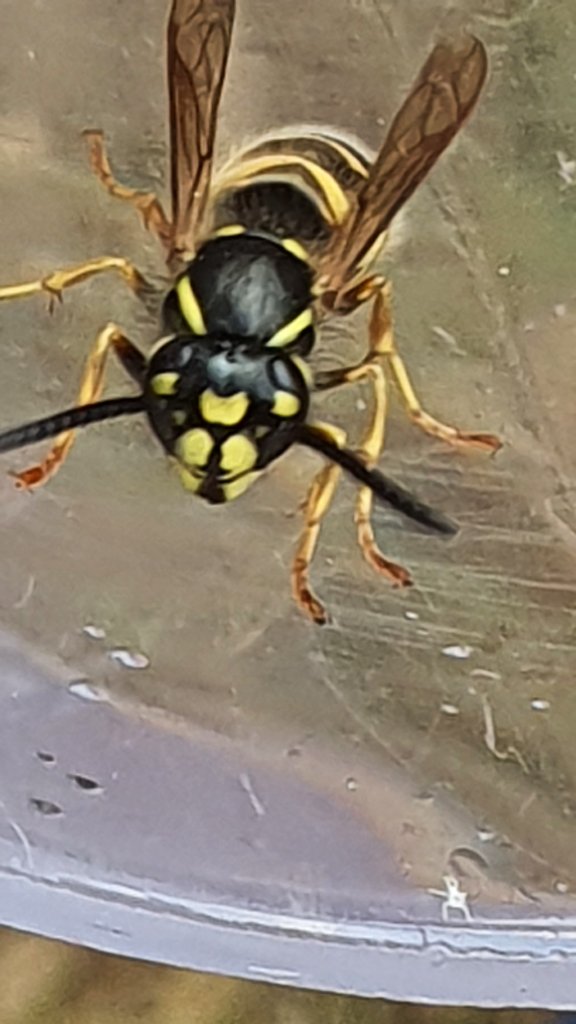
A half-cut common wasp, after sipping cider and lager. Never mix drinks.
Then back to their campsite for a cup of tea and a cake. Laughs (loads of laughs) and a cheeky beer before leaving them to it. Some of the laughs were about naughty things. Well they would be on a campsite, wouldn’t they?
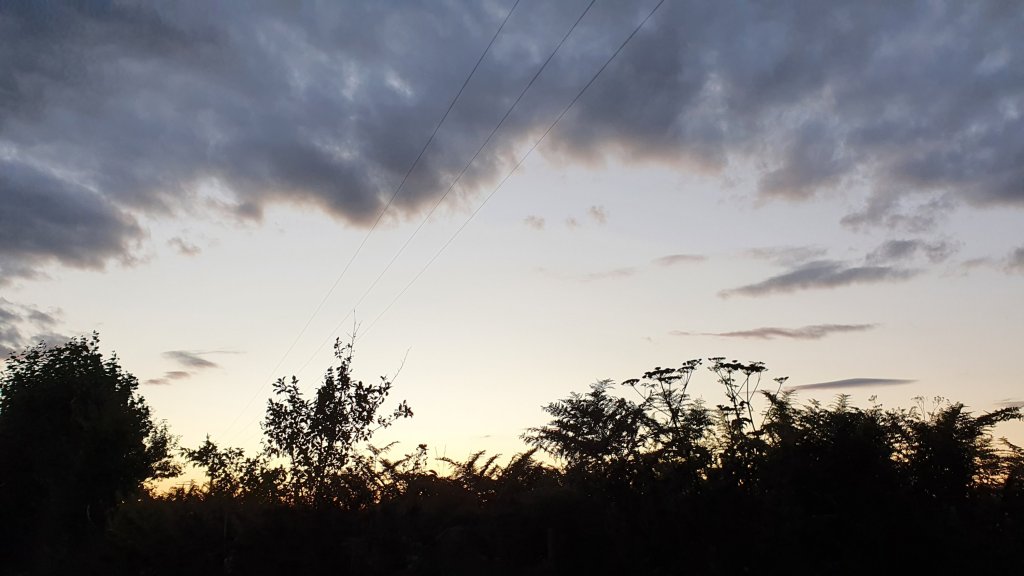
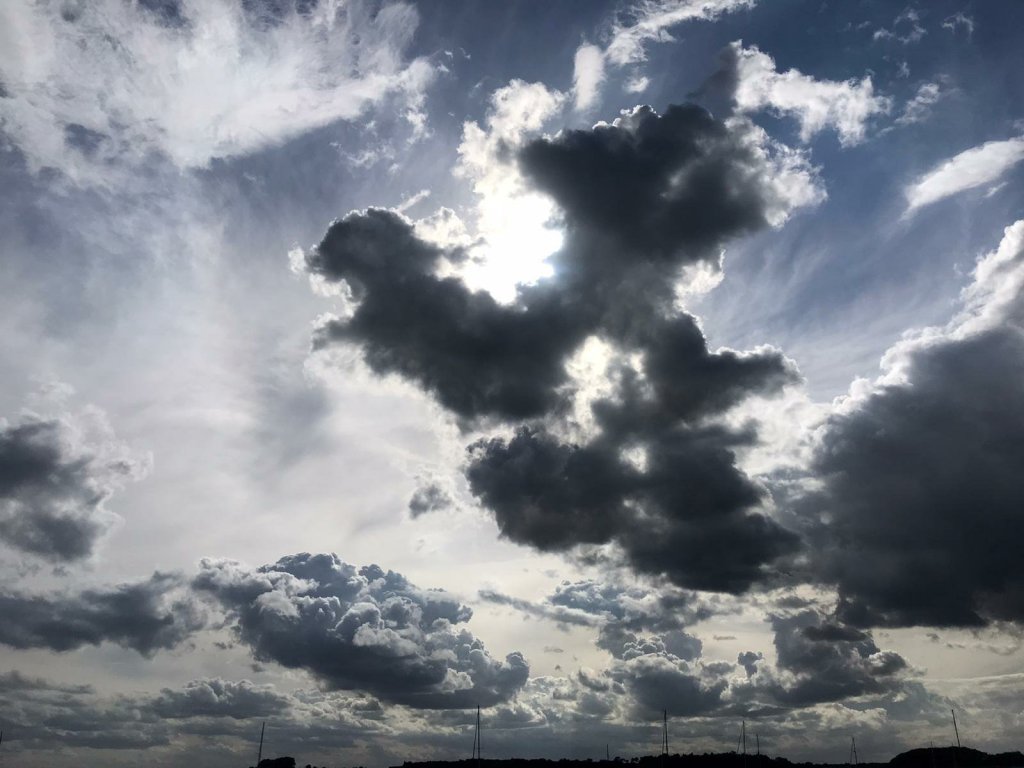
The sky, at home, at the end of our day of simple pleasures.
Our friends are camping in Suffolk at the moment and have been posting some fabulous images of the vast East Anglian sky.
Thanks for the picture, Jimbob.
I know I take our atmosphere for granted. It is highly complex but very simple at the same time, and I am pretty casual in appreciating what it does for us and every living thing on the planet. Our atmosphere is BIG. But we are most directly influenced by what happens in the Troposphere; the relatively thin layer closest to the Earth.
We breath in a mixture of gases we call ‘air’. Around 78% Nitrogen, 21% Oxygen and the final 1% is a mixture of mainly Argon but also has some Carbon Dioxide in it. I have to stop and slap myself about that! It is exactly what we need to support life as we know it.
We breath in that cocktail of gases, use up the oxygen, which keeps us alive by mixing into our blood and servicing our biological machine we call our body. We then expell the inert gases (Nitrogen, Argon etc) AND Carbon Dioxide which we don’t need. That in itself is incredible. But then all of the living plants on the planet from Oak trees to grass and moss to algae in the oceans convert that CO² to Oxygen for us. We don’t have to pay them, thank them, buy them a pint..nothing. They do it for free. Now, I’m not a tree hugger but I will definitely pat the trunk of the next tree I come across and whisper a quiet thank you to the grass when I walk over my lawn later.
The coronavirus lockdowns led to reduced pollution globally, which in-turn, had an almost instant positive impact on the quality of our atmosphere (and rivers, seas and general quality of life).
We may very well need to leave this Earth at some stage in the future as our ability to sustain our ever growing population fails. Many clever brains including Elon Musk and Stephen Hawking amongst them believe we will inevitably have to. So, I am going to enjoy what makes life on this planet possible (and look so beautiful from space) and do my best to look after our atmosphere.
First weekend of the summer jolly-days and I’m very much focussing on food. I guess this is a natural follow on from the simple stuff I mentioned yesterday.
Caterpillars of the Large White butterfly dining on our Nasturtiums.
The caterpillars of the Large White butterfly (see post from earlier this week) are feeding merrily on the Nasturtium flowers in the garden. It has been a great year so far for butterflies.
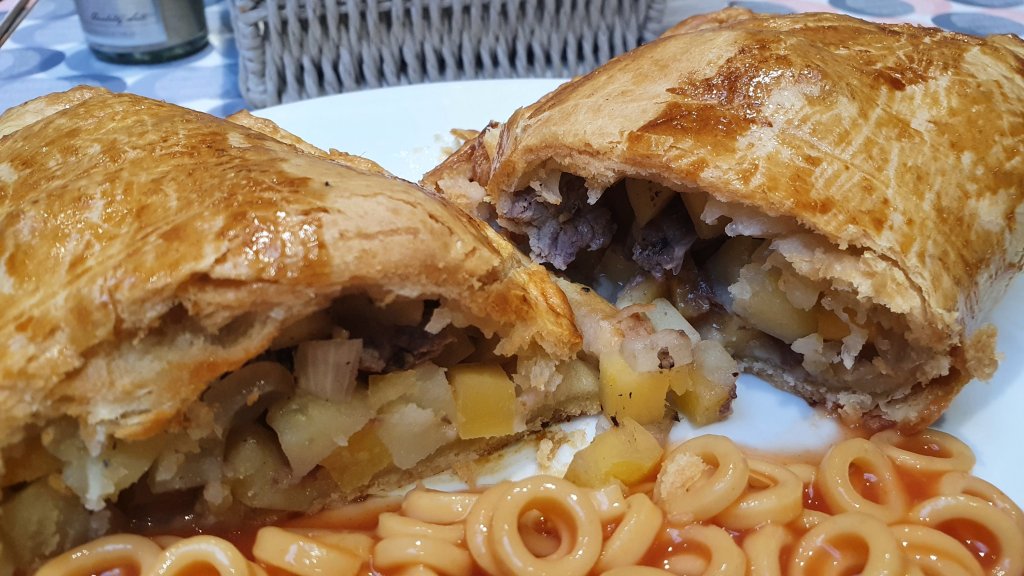
Today, I have made a rare visit to the kitchen to make dinner – pasties. Coming from the west country it has to be something I am able to make and to as traditional a recipe as possible.
So, beef, swede, potato and onion only. No carrot. No mince. And definitely no pre-cooked filling. I had mine with the traditional accompaniment. Legend has it that the tin miners of Cornwall would have half of their pasty filled with the beef and vegetables and the other half with spaghetti hoops (?)
Walking along through the field of barley using the tractor tracks as our path.
We went on our new walk again this evening – for the second time, so not completely new. We came across no one else. It was like we had the place to ourselves. Appreciating what we have around us. Over the four and a half kilometers there is not one pavement or streetlight. That’s the same for pretty much every walk we do from our house. It was a grey day, and I noticed the leaves on the trees looking drier and starting to curl and crispen at the edges. I feel summer has peaked.
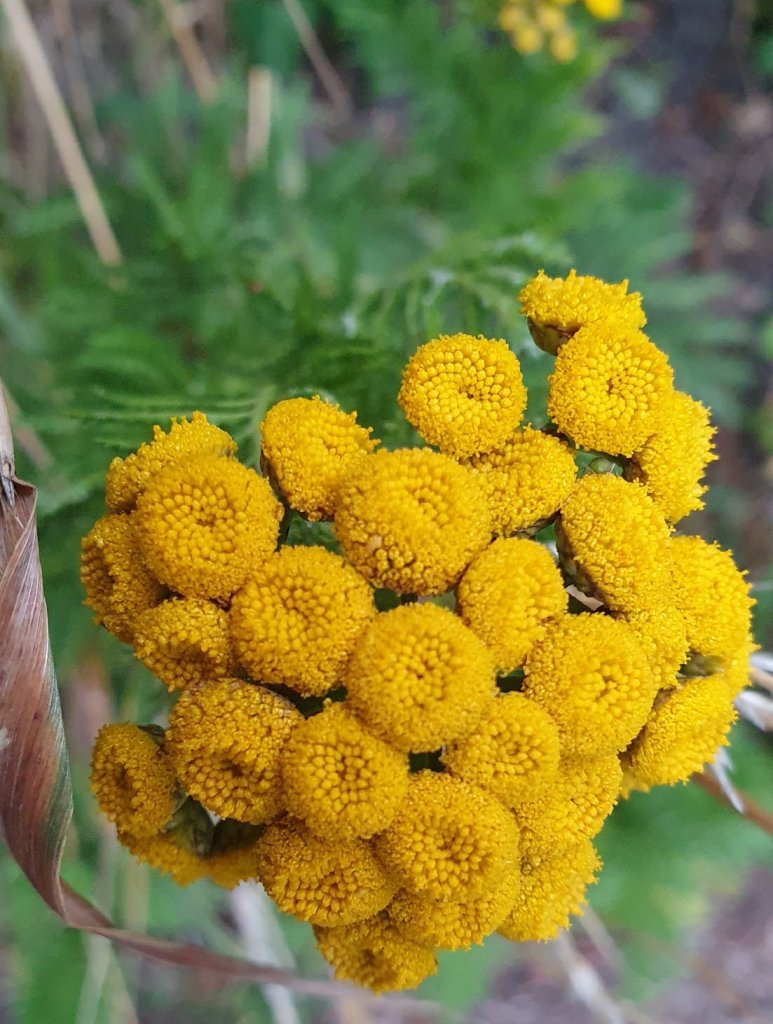
We found this Tansy (Tanacetum vulgar) whilst walking this evening. It is the main food of the very rare Tansy Beetle. The leaves were eaten in Britain around Easter time as it was believed to kill the worms that were in the fish that was feasted on in celebration. However, it was also given to pregnant women in medieval times to cause a termination. Basically, it is a very toxic plant for humans and mammals but great for a particular beetle.
Simple things. The wonderful satisfaction and pleasure that comes from the simplicity of no drama, no pressure, no expectation.
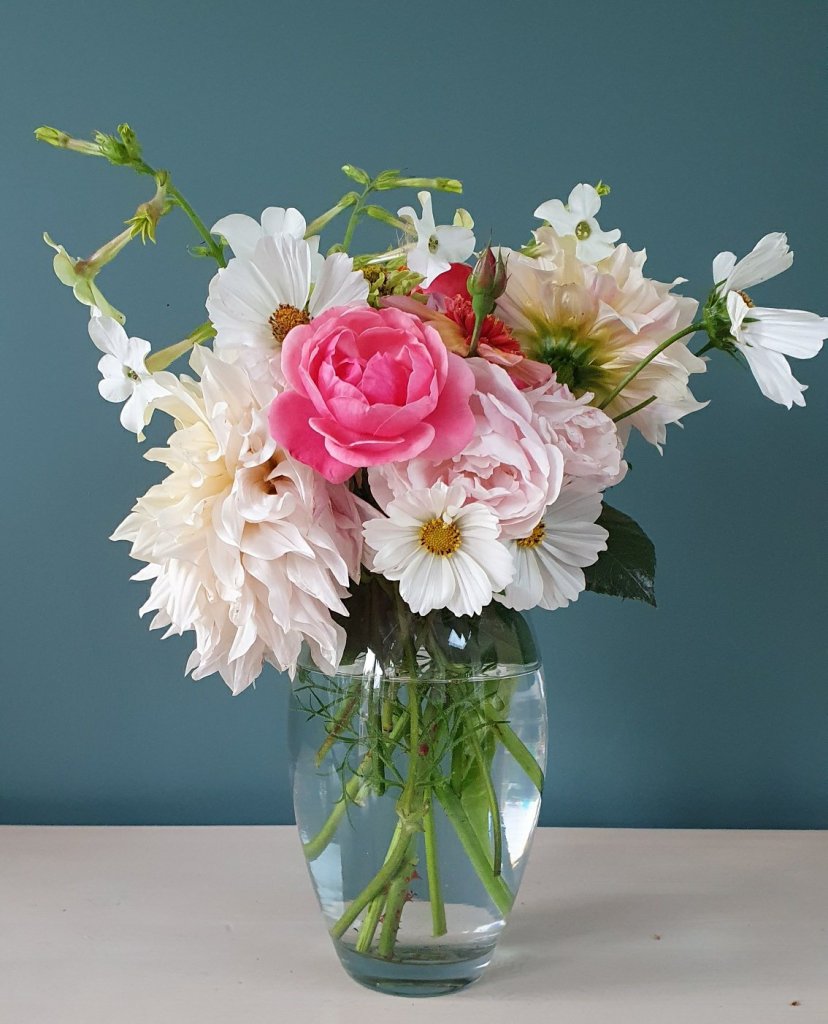
The first flowers from the cutting bed in the garden. Simple things.
Today, I feel, is the first day of our summer holidays. There is no rush to get things done; which means when things do get done, I can revel in striking a line through it.
Planting out the lavender, taking rubbish to the tip (that has been stacked down the side passage since clearing out the shed and greenhouse – Days xx), feeding the birds, clearing the duck weed from the pond, trimming the grape vine. All accomplished in the past 24 hours, all ticked off. Full satisfaction, no sweat.
Lisa and Stan have dug up some potatoes and snipped some courgettes from the garden. Within 45 minutes of being harvested we were eating courgette frittata and buttered new potatoes. Later it’s veggie chilli and ‘You Only Live Twice’ on the telly.
But right now, I’m sitting in the armchair by the window with a good book and a cup of tea. Watching the blackbirds peck the tray of mealworms, I notice the adults are accompanied by three juveniles. The rain is pit-patting on the windows and sky-lantern.
What do I really have to worry about? I could spend some time fretting about the big stuff; the virus, the environment, poverty. And sometimes, I do. But right now, right here, I’m putting my own oxygen mask on and contentedly taking in deep, satisfying breaths of the simple stuff.
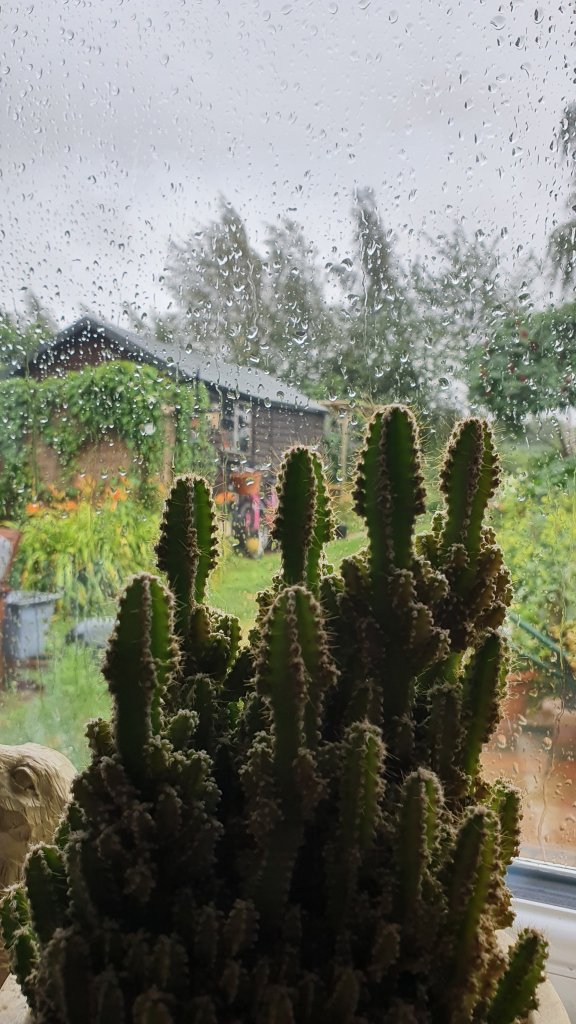
Sitting in a comfy armchair, watching the rain drops slide down the window. Letting the simple things matters.
It was my last day at work today and I am going to miss my daily drives down to Heybridge. We’ve got a fantastic month or so ahead of relaxation and trying to take stock of what has happened over the past few months.
I’m going to head down there this summer though to do a few walks and just check-in with the school and the outdoor space. There’s the coastal area and the canal and river stretches as well as the expanses of green spaces dominated by agriculture.
My drive to and from Heybridge takes about 35/40 minutes each way. Enough time to prepare for what is ahead and to reflect and unwind from what has happened that day.
The journeys often throw up sights and signs that trigger a thought or a moment of contemplation. Sometimes these will put a smile on my face, some will spark a memory, occasionally a feeling of melancholy.
A few days ago I came around a bend in one of the rural stretches of road and had to swerve slightly to avoid running over a wood pigeon. My wheels tracked either side of it as it seemed to drag itself across the tarmac. In my rear view mirror a few feathers flew into the air, caught in the car’s dirty air. My immediate thought was to pull over and rescue the bird. But it was clearly in some trouble already, probably injured by another car.
I felt for it – the trauma being experienced by this two-a-penny bird. There are loads of pigeons and, although I know that the species is not going to decline because of this one fatality, nevertheless it was a bird that was suffering. When it woke that morning it had no idea that that would be it’s last one. What was painful for me, was its death was being drawn out.
It would be very easy to take some deep (and contrived) meaning or lesson from all of this. Pointless. Instead, I will look at the wood pigeon in a very different way now. I won’t take them for granted, collectively or individually. I am grateful for each and every one. Their flight whimsies, their coo-coos, their nodding heads, their clapping wings and the clumsy sounding way they exit from trees when startled. I love the pigeon.
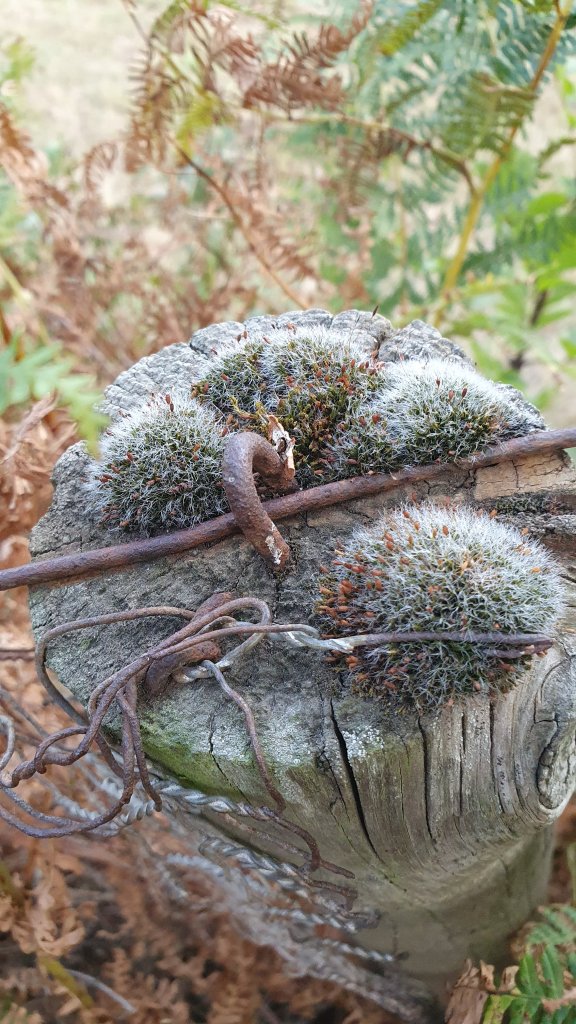
This strange collection of (what I believe are) Common Pincushion mosses (Dicranoweisia cirrata) on top of a fence post down our lane, caught my attention on our walk this evening. They look like you could gently prod them and they would sprout legs, then blindly sidle off down the post and into the undergrowth.
A day working from home. It’s been quite pleasant being with the family at home midweek. We have seen a lot of each other over recent months, but we never tire of each others company.
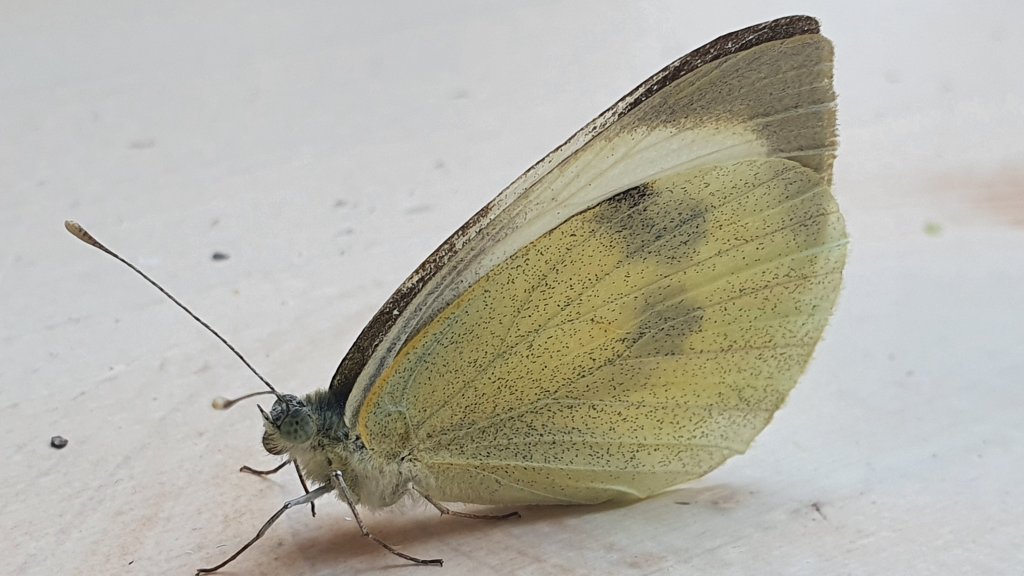
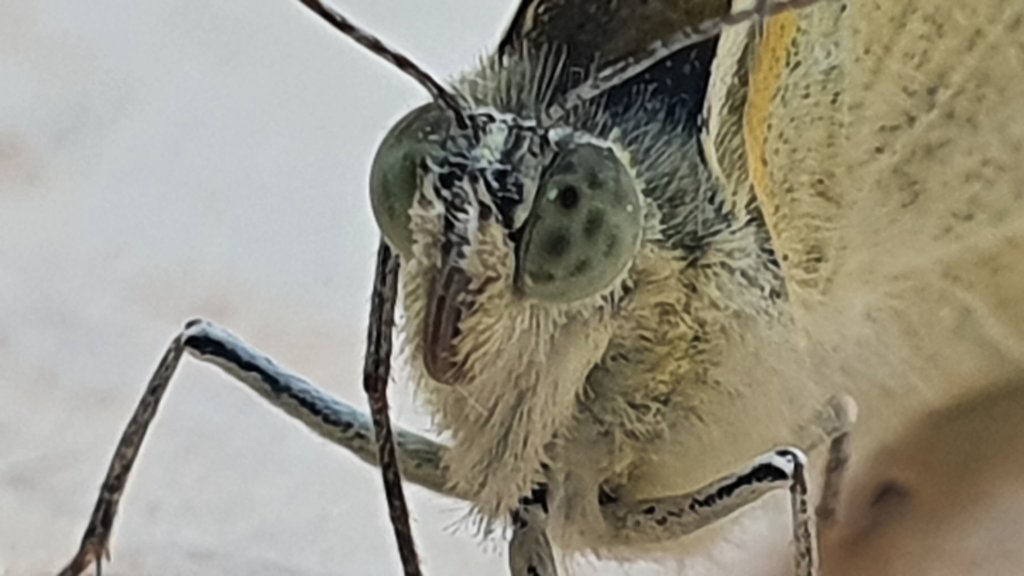
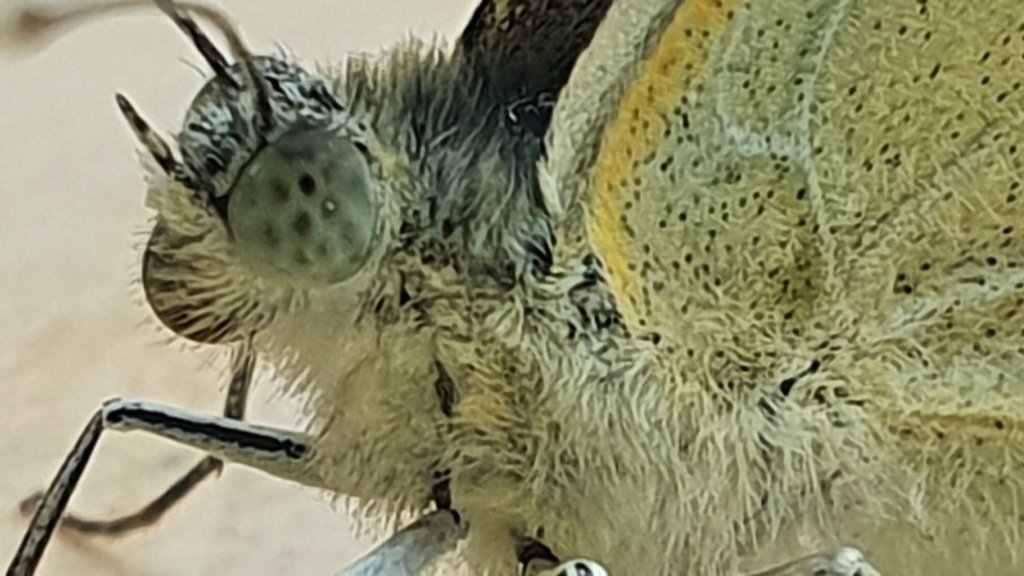
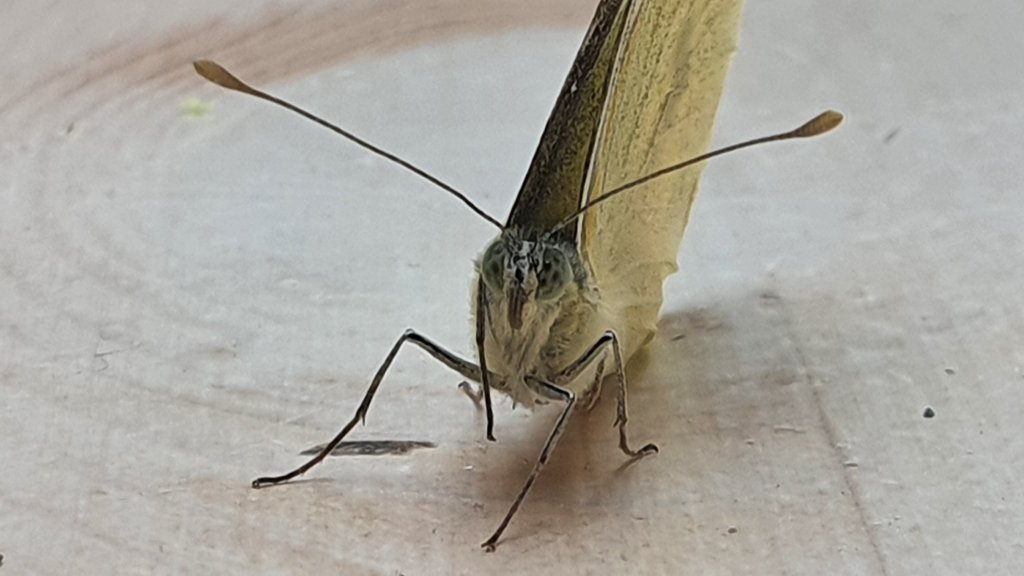
The Large White butterfly (Pieris brassicae) is relatively common and widespread throughout the UK. The two spots on the forewings indicate that this is a female.
A butterfly fluttered into the house this afternoon whilst I was at my laptop and set down right in front of me.
Out in the garden fluttering from flower to flower they look so pretty. Think again. It’s proboscis is folded up centrally, underneath the eyes. It uses this big tube to suck up the nectar of flowers.
I have been trying to capture some pictures of butterflies over the past few weeks but have struggled. They’re so jumpy and evasive and once in the air can cover a fair distance pretty rapidly.
My memory of butterflies as a kid was that they were very slow, quite clumsy looking creatures in flight. And very slow on the uptake when it came to evading capture.
At the base of it’s antennae is the Johnston’s organ which is used to create balance and orientation in flight.
This one seemed to know my quest had been challenging and thought it would sit for me to take as many pictures as I wanted, and from any distance.
It’s legs and antennae are well endowed with chemoteceptors which enable males to seek out the feronomes of females, and to ‘taste’ where the best nectar is. The legs can also tapp on leaves to check their suitability to lay eggs.
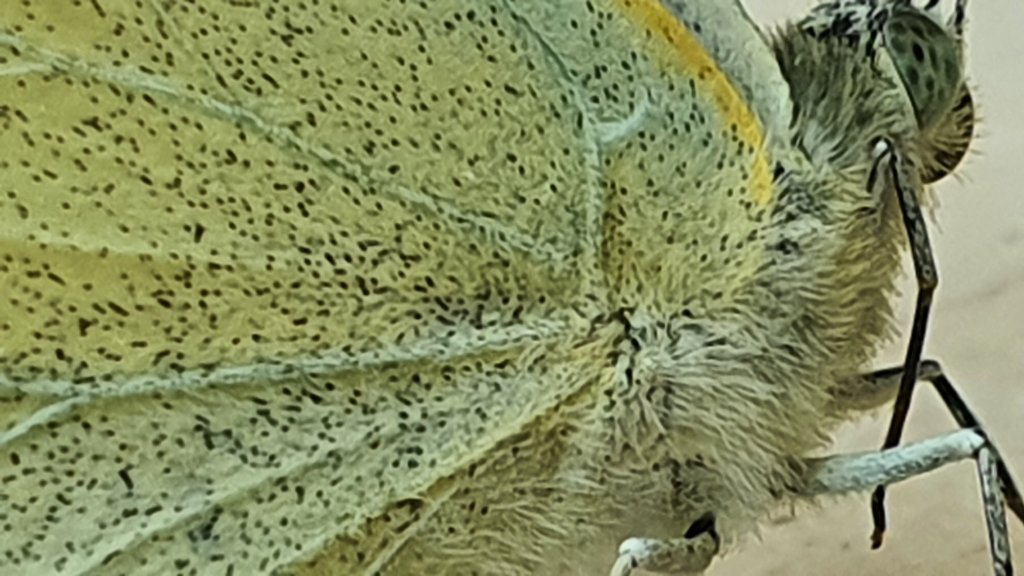
I was fascinated by the pigments of it’s wings and the mottled patterning. Also, of that amazing mouthpiece and eyes. The surprisingly long antennae and the mouthparts that resembles some kind of machinery. But those eyes, each one looks like it is made of many eyes behind a plastic dome. These are it’s compound eyes which provide the majority of it’s sight.
A butterfly’s wings have thousands of tiny scales making them hydrophobic (water repellent) and their hollow veins allow blood to be pumped through when warming in the sun.
Another image from the walk in Norfolk on Sunday. The Comma butterfly (Polygonia c-album) was at risk of dying out in the UK but has recovered remarkably in recent years.
It’s been a day of completing work as we near the end of the school year. A little strange as the kids are not in and with things still not back to normal yet.
We’ve booked flights for Italy in October. A sign that we are looking beyond the here and now and planning little more into the future, albeit with some risk. It is widely predicted that there will be a second spike of the virus which may lead to restrictions returning. Travel will almost certainly be affected, but how much? We can only guess.
But the economy seems to be all that the politicians are concerned about. Quite right, many would say, but at what cost?
I am, however, still very much in the here and now. The lockdown has underlined to me the importance of living in the moment and enjoying as much of it as we can.
I have this wonderful little book called The Nature Book by Marianne Taylor. I think it must have been a stocking filler one Christmas. I have been loving picking up morsels of knowledge everytime I have visited the loo to take the weight off my feet.
I have been reading the section on ecology and ecosystems. This coincided with me looking at Open University free courses on the natural world. There are some wonderful mini courses available and I signed up and started the one on Darwin and evolution theory according to natural selection.
There’s always time to learn something new or deepen an understanding of something you know the basics of. I feel I will be doing a few of these.
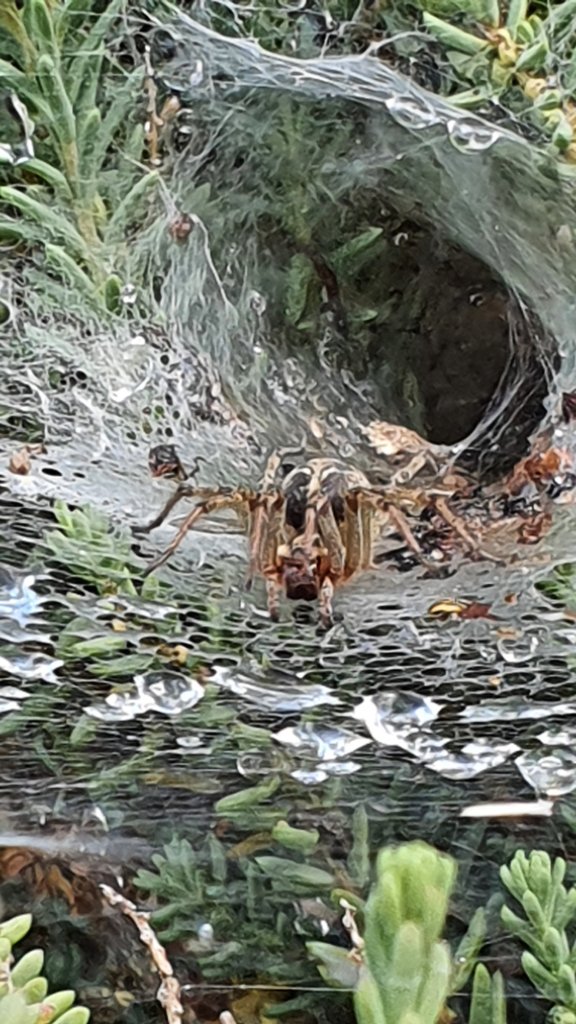
The Labyrinth spider waiting for it’s prey to stumble across it’s web. Seen on our walk on Sunday.
The world has already reverted back to it’s pre-Covid19 madness.
It wasn’t that long ago that we were all saying how much we had learnt about ourselves and our relationships with one another. That coping with this virus across the world made everyone our neighbour regardless of nationality.
It was (is) a virus that could (and did) affect everyone, rich or poor, black or white, east or west. This apparent non-discrimination in a virus levelled any status that had existed, wealth and power really didn’t matter.
There was a real appreciation that the nationwide lockdown gave people time they had never had before. Time to enage with their family, to share more time together and to importantly appreciate what was around us, our immediate locality. The nature within it and the simple things in life that ordinarily pass us by and go unoticed.
We have such short memories. Muscle-memory of the brain has sadly kicked in.
Since lockdown measures have been relaxed we have made economic enemies of China and Russia. We have had strained trade talks with the EU, just five months before we withdraw fully by then whilst in post-pandemic economic turmoil. A man is accused of multiple stabbings at a newly reopened theme park, a celebrity is suing their partner over domestic abuse. And finally, warnings from scientists who advise the government have said that the virus will still be out there and another wave is almost inevitable.
Are we just completely bonkers? Do we have very short memenories? Or are we culturally pre-dispositioned to return to our bad old ways?
Stan played golf today. Me, Lisa, Adora and Mabel went on a new walk – down new lanes, past new hedgerows and across new fields of barley. I reminded myself once again how glad I am that we don’t live in a town.
The birds are so quiet now. They’ve suddenly gone quiet. The mating season is over for most and territories no longer need protecting. Weirdly there are more birds around now than at the start of spring. But they’re all busy feeding and learning how to be birds, no time to chat.
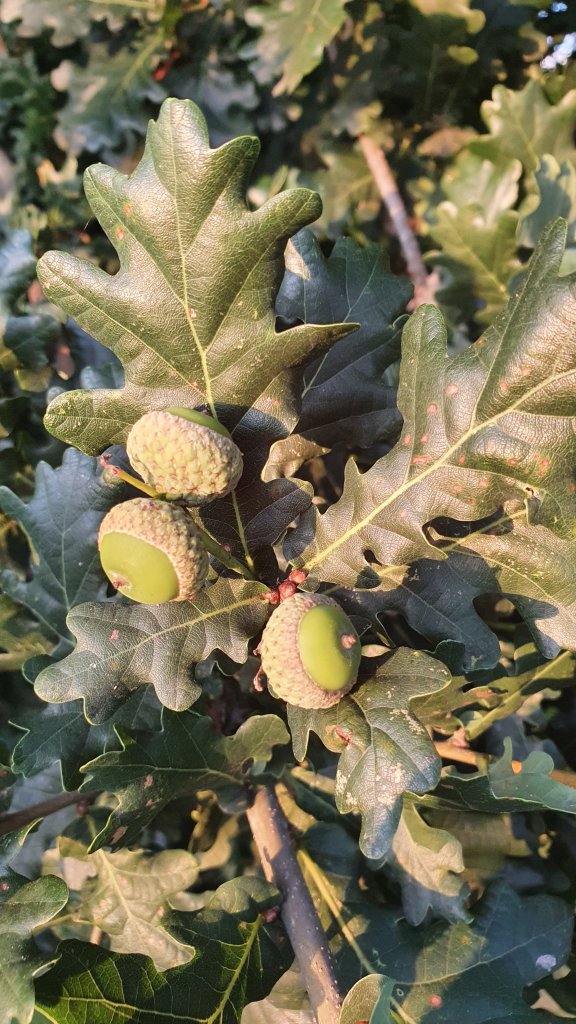
On our walk this evening I saw these very young acorns. I have never noticed this before. Fifty years on this planet and I am still seeing new things right under my nose.
I was relieved to wake up this morning without blisters, painful legs, or sunstroke. That’s the first ‘morning after, the walk before’ where I haven’t had some kind of infliction. Happy days.
Down at Heybridge today, and I went to check in with the grounds before going into the building. As I have already mentioned, we are hoping to make some positive changes to the land to make the most of it’s location and the wildlife it could attract. This will hopefully lead to some unique school experiences for our students and staff.
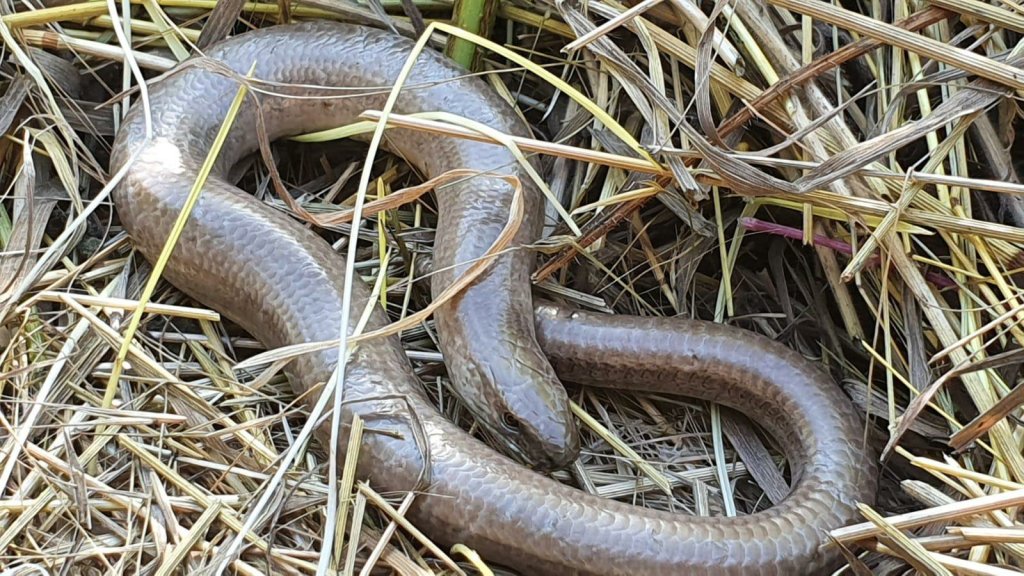
Slow worm (Anguis fragilis) spreading it’s body to soak up as much heat as possible under the afternoon sun. Baking underneath a plastic compost bin.
On Friday, I came across a couple of slowworms heating themselves under a plastic compost bin. One was there again this morning, an again this afternoon. We found two more under the lid. These legless lizards are often mistaken for snakes and are completely harmless. They’re also great friends to the gardener, eating copious numbers of slugs.
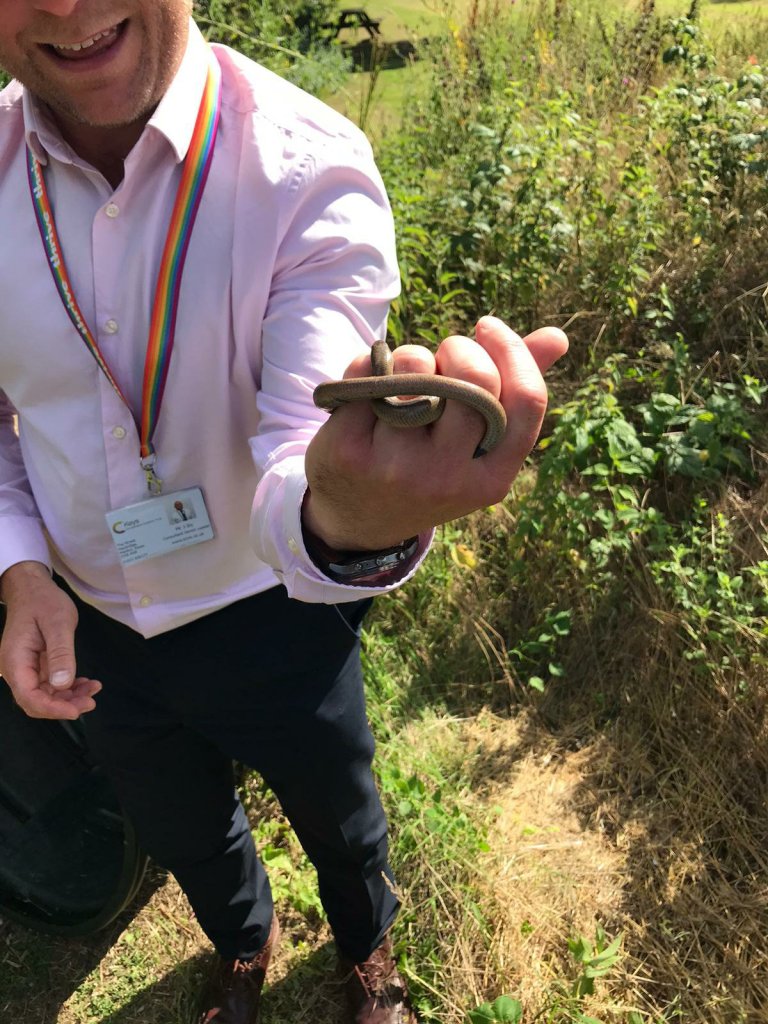
I picked one up today. It put such a wide smile on my face. The last time I held a slowworm was probably when I was about 10 years old. I can’t stop smiling just thinking about it. Their smooth, warm skin is unmistakable and the way they wrapped their body around my fingers. It triggers something special inside, I get a dopamine rush.
Me and my mates used to collect them from the railway line where I used to live in Ivybridge, Devon. Predictably, today as back then, this one deficated on my hand whilst I held it – a natural defensive behaviour. When I was a kid, I remember them losing their tails occasionally too.
We used to lay out corrugated iron sheets that we found lying around the disused railway sidings behind Blachford Road. Then, throughout the summer holidays, in between playing football, going to the River Erme woods and doing the library summer challenge, we would cycle up to check what was cooking under the metal.
There were so many sheets on the go that we would split up and check several each, only calling others over if there was something amazing like a nest of them or some of the legged varieties. That sort of find would require many swift hands. One hot afternoon, a cry piped up to my left. About 10 metres away my friend was holding up the fattest slowworm ever. It was also much longer than any we had seen before. He thought it may be pregnant or just eaten another slowworm.
Within just a few seconds, I noticed this slowworm also had a black zig-zag line down it’s back. My other mate must have noticed it too; in unison, like some scene out of the film Stand By Me, we both shouted “Adder! Shit!”
Me and Slow worm. I can’t stop smiling.
Now, maybe it’s my rose-tinted memory colouring in the sepia tinged mental images of my childhood. But, I can picture my friend swinging this sun-dozy reptile by it’s tale and throwing it (not very far) into a nearby gorse bush. Then we ran. And ran. We got on our bikes and peddled off home, laughing all the way.
But we came back the next day to check the corrugated sheets again. Well, I like to think so anyway.
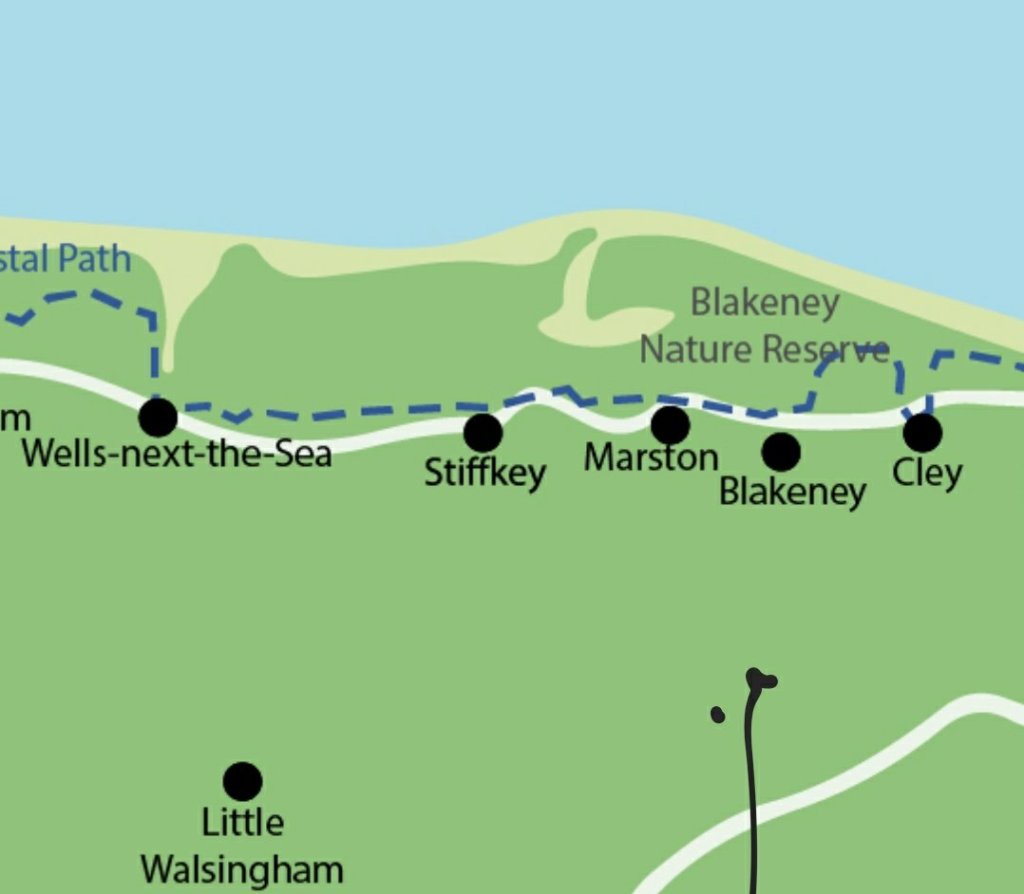
10.03am Third leg of the Norfolk Coastal Path today with the great and good of the Gentleman’s Film and Leisure Club. A 7.30am start and we drove to Cley-next-the-Sea to park. Then the coastal hopper bus along the coast road to Wells-next-the-Sea.
The usual elements of our walks featured; the coffee to start, no bacon sandwiches but croissants all round. Plus, the phone-only photo competition. the theme being close-ups. Another i-Spy book up for grabs as the first prize.
GFLC walking again.
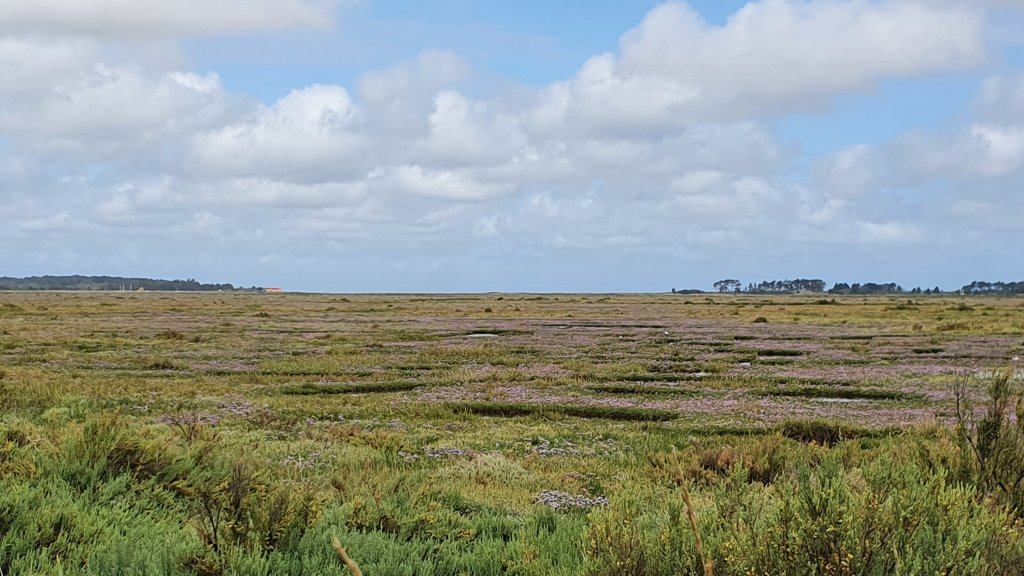
A brief walk through Wells, and we were on the raised footpath heading east. The drizzle had drifted off and the thick cloud had burnt away. Once again, we had a day of huge blue skies and astoundingly vast stretches of salt marsh as far as the eye could strain. Facing north, it was just sky and salt marsh with the occasional thread of golden sand between.
Just tonnes of sky and salt marsh. Looking back to Wells-next-the-Sea.
But it’s not quite as simple as that, when you look closer. Veins of water weave in, around and through the silt and vegetation, bringing fresh supplies of salt water and nutrients inland. Clay and minerals settle, algae grows, more settles around that, samphire, sea lavender and other plants then take root.
Nutrient-rich salt water inlets.
This uber-fertile habitat is great for insects, which I turn attracts birds. Simple really. Which is why it seems crazy not to look after these precious areas of our coast.
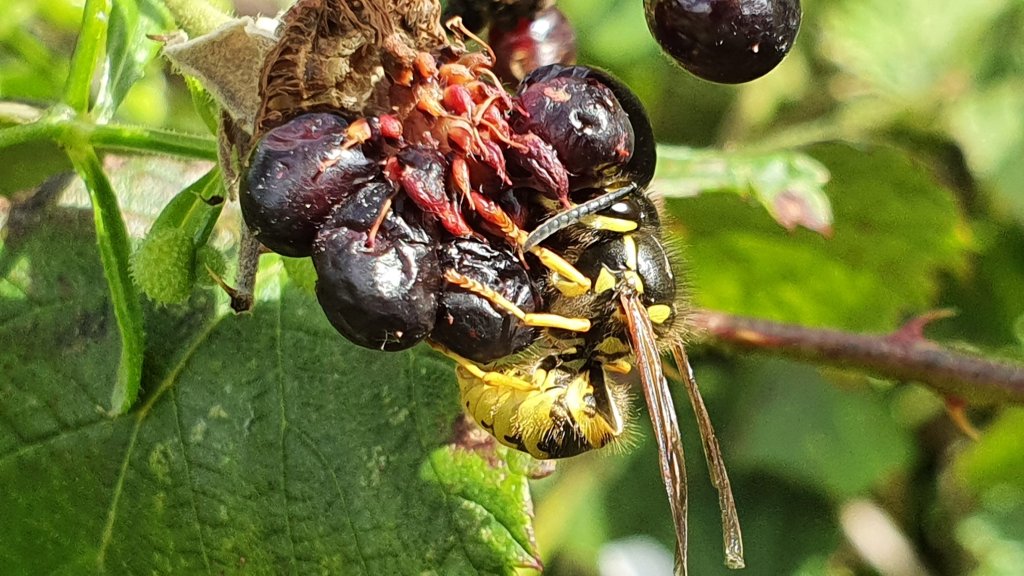
Common wasp (Vespula vulgaris) enjoying an early blackberry feast.
We stopped of at a pub in Marston. An odd affair, everyone is seated outside and it is table service only. The staff all wear masks.
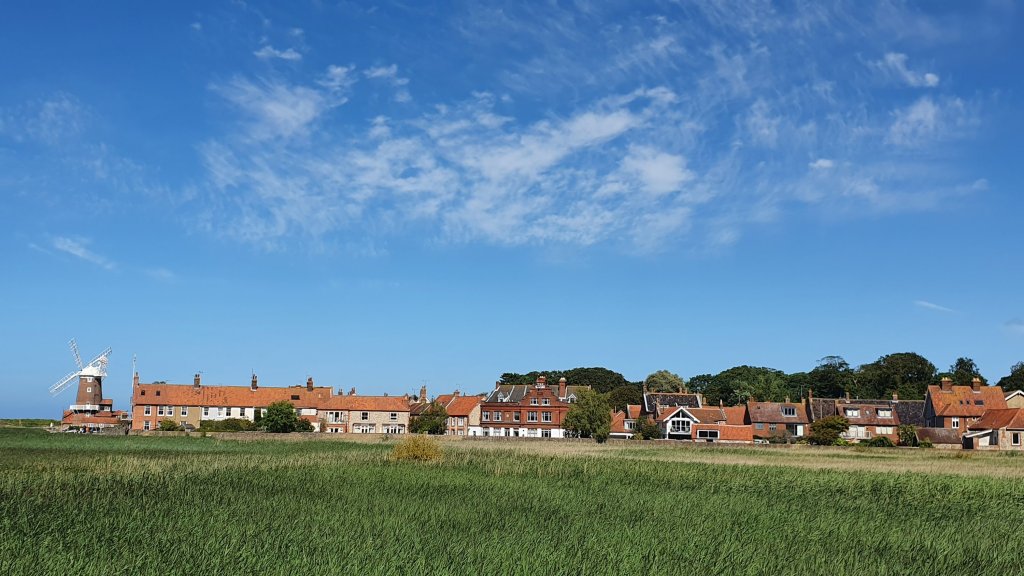
Cley-next-the-Sea from the footpath.
Then the final stretch looping round to Cley (rhymes with sky). It’s easy to be a bit blas`e about the birds, butterflies, insects, flowers and plants that we encounter on these walks. But I never take it for granted. Several kestrels, little egrets, black headed gulls, lapwing, cormorants, reed warblers and skylarks. Another great walk.
The winning picture?
Jim, you had a fine day behind the lens. Submitting 16+ pictures increases your chances too I guess.



 The Bald Birder