It’s been a soggy old day today. It’s like laying under a damp blanket. One of those days when I don’t feel I have fully dried from the shower I had this morning. But, I also had a Cadburys Crunchie today; first time in ages and it was fantastic. So, not all bad.
I am reading up about arachnids and molluscs. Not closely related but are both invertebrates, so share the biological feature of having no backbone. I’ve come across a few adults who could also fall into that category too, metaphorically of course.
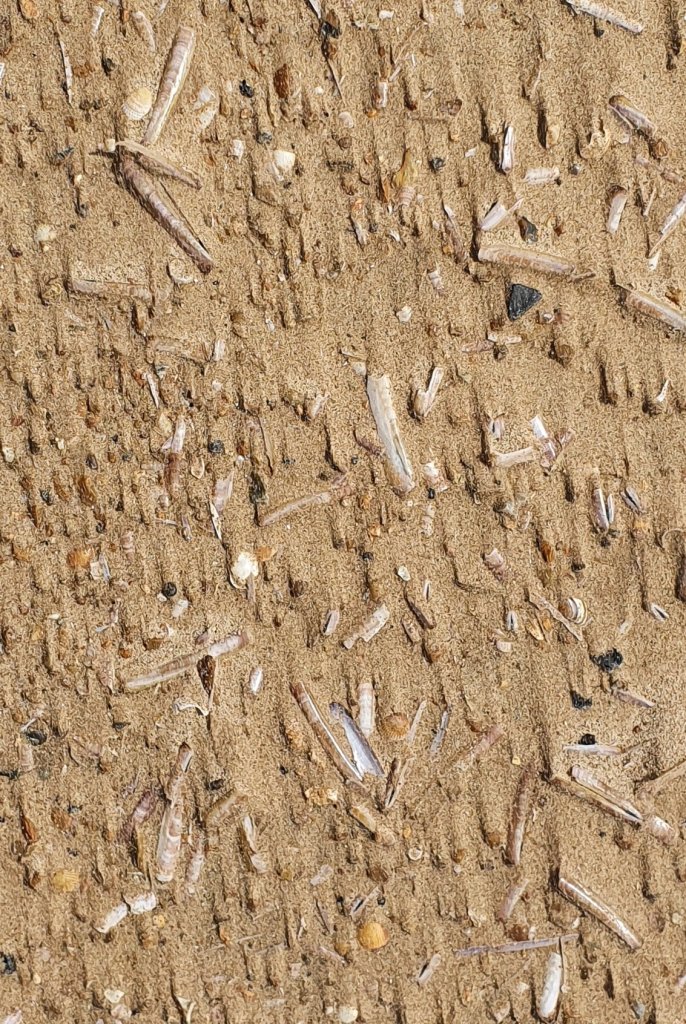
Razor-shells on Holkham beach.
Whilst walking on the beach at the weekend there was a patch that was just sand and razorshells. It was like walking on a huge slab of peanut- brittle which crushed under foot.
Many moluscs wear the protection for their soft-bodies on the outside whereas mammals have their skeleton on the inside. Razorshells live vertically in the sand and can either rise-up or burrow through muscular contraction and expansion.
Their muscular ‘foot’ is pumped with blood which anchors it to then pull it deeper into the sand. Quite an amazing creature really. Living in the sand means it doesn’t have to have a particularly strong shell.
The number of times I have walked on these used shells and picked them up but never learned about them.
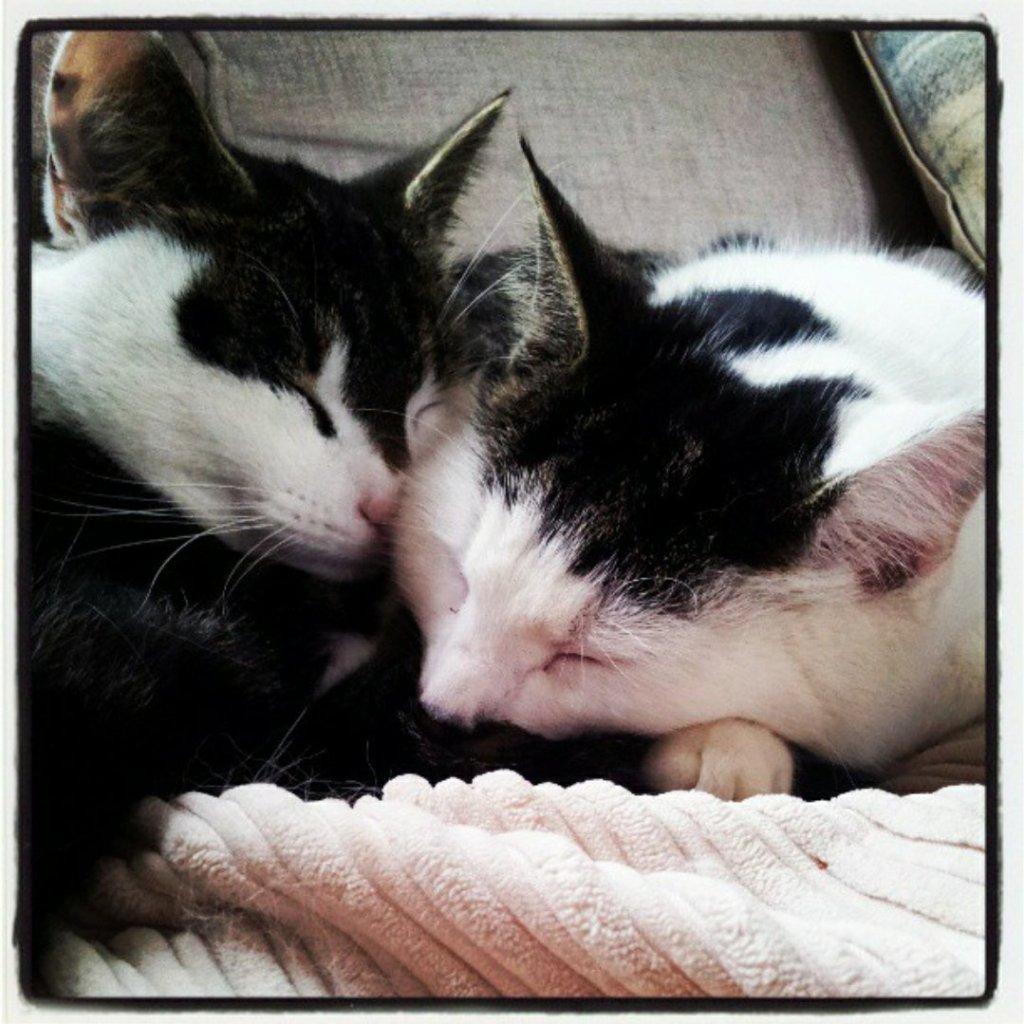
I feel a little guilty. Since Mabel (dog) has come on the scene, Wells and Walsingham (cats, brother and sister) have been moved slightly to the rear of the family stage. Now the cats, especially at this time of the year, bring us ‘gifts of nature’. I think it’s because they are trying to win our affections back but they’ve actually always done it. That unmistakable lower pitched, marble; mow-ing out side of our bedroom window is a sure sign that one of them has a mouse/shrew/frog/internal organ of a rabbit. It’s just their way of saying thanks.
Wells and Walsie. Our two mousers.
I ignore it, ensuring the windows are closed. Then after the mow-ing has stoped, I hear a small thud and scampering across the flat, felted roof. They’re playing a game of throw-n-chase with the gift we have rejected. I feel so guilty.
So, I’ve just finished reading The Salt Path by Raynor Winn. I’ve been threatening to finish it for a few weeks now to be honest. The trouble is, I start a book, then I only have to go a few days without reading, and I’ve lost my track.
Even worse, if I’ve been reading at night. I will often nod off, only waking when the open book falls on to my face.
Anyway, it’s a good read, quite I inspirational and upsetting at the same time. It’s focus is the walk around the coastal path of the west country. Somerset, Devon, Cornwall, Dorset. It naturally accounts the daytime observations whilst on foot.
Thanks, Sean.
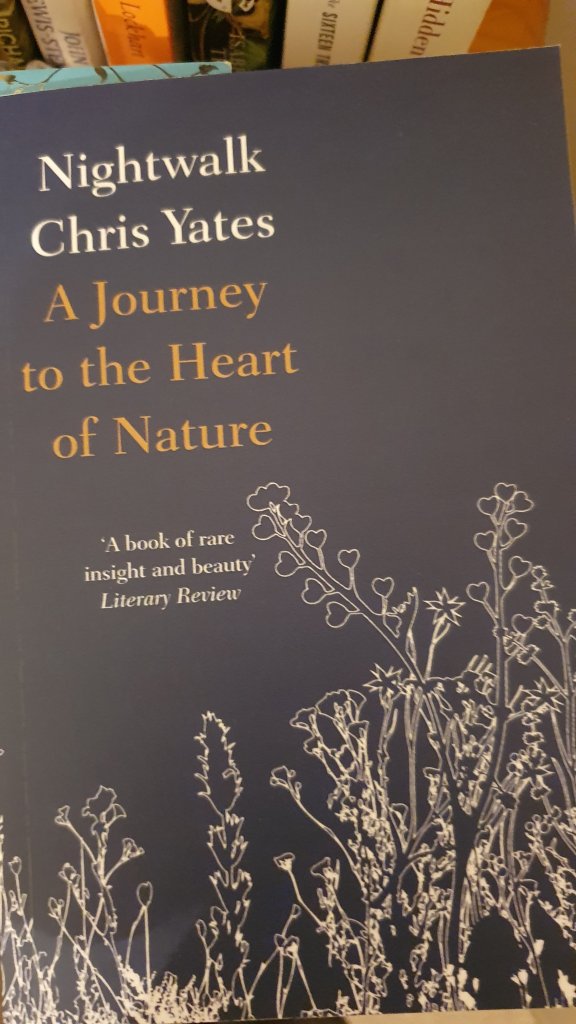
My current read, on the contrary, deliberately recounts a nighttime walk shortly after the summer solstice. One of the shortest nightimes of the year. Walking through the fields and woods of the North Downs.
The author sets off just before nightfall and returns just as the sun is rising. In between he describes the sounds and sights (it is never completely dark in moonlight) of nature.
I’m tempted to do something similar when we go to Norfolk on holiday in a few weeks time. It would be good to switch from the diurnal to the nocturnal for a one-off. Life is all about experiences.
Well, I have felt pretty rubbish all day. A tterrible night’s sleep included waking at around 1.30am, curled up in the foetal position, with the most intense shakes. I tried to walk but found it almost impossible to put one foot in front of the other as my muscles spasmed. I eventually made it to the bathroom to pee and had to sit down as I was shaking so much.
I genuinely thought that either I had Covid19 or was having some kind of stroke. Eventually, I fell asleep shivering, only to be woken by one of the cats jumping onto my head.
So, fortunately, it wasn’t coronavirus but sun-stroke. I say fortunately, it felt so scary whilst the shakes were happening. The sun was pretty relentless yesterday and the wind also contributed I guess. Still, a great walk.
The kestrels were there again this evening after work. They’re like flying mermaids. Enticing me not on to rocks and a watery grave, but instead to turn the grounds of the school into an outdoor learning environment.
I’ve started to scope it out and have written a proposal paper. I now need to put together a willing band of enthusiasts from the school staff to help deliver it. Starting with some trees in the Wooded Space. There are going to be a number of distinct ‘spaces’ to experience, but more of that to follow in the coming months.
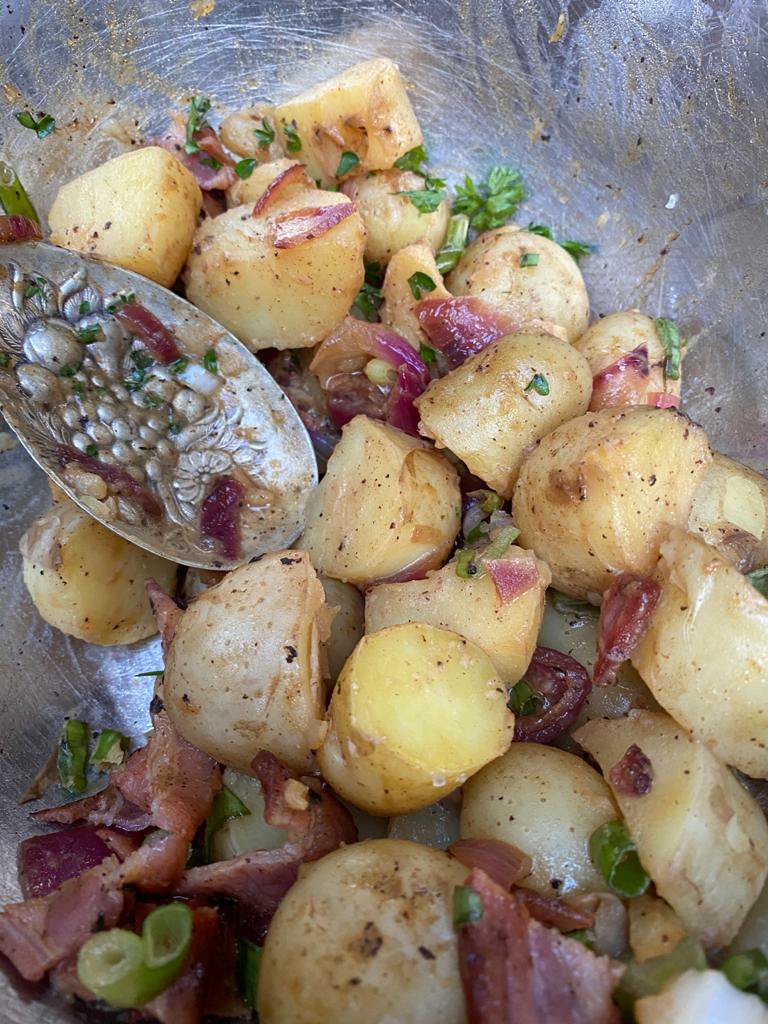
Stan’s potatoes. Harvested yesterday and made into a very special warm potato salad. The smile on that boy’s face was a picture.
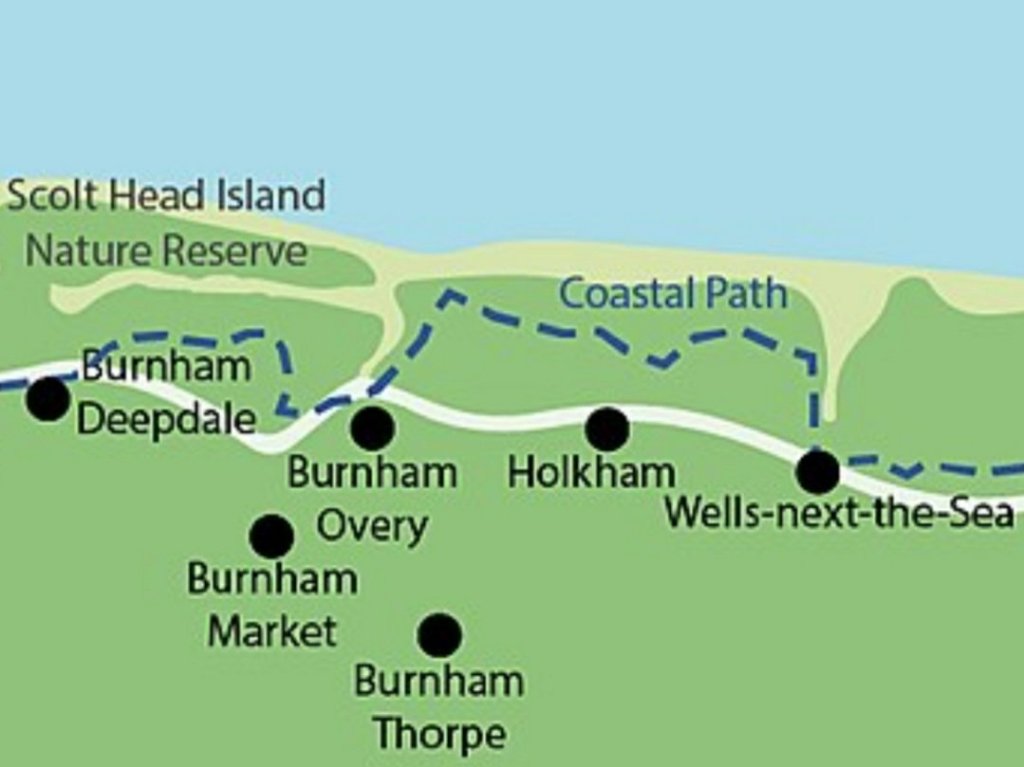
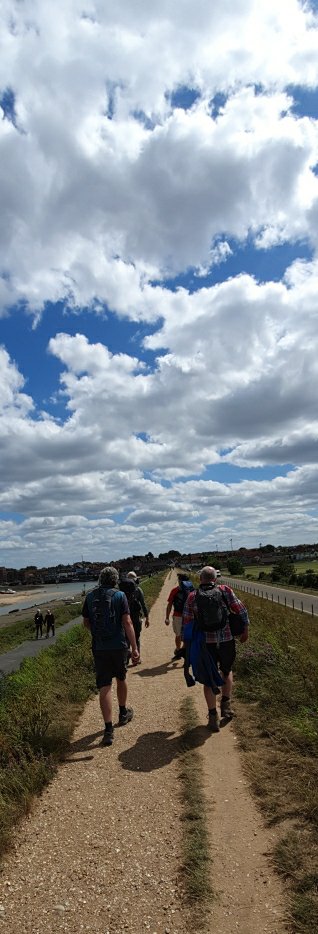
Second leg of the Norfolk Coastal Path. Burnham Deepdale to Wells-next-the-Sea. About 15km.
I love this part of the world. It’s a home from home and a place that never stops giving. As a family we have been visiting at least once a year (but usually more) since the kids were in nappies. So, this was a leg I was really looking forward to.
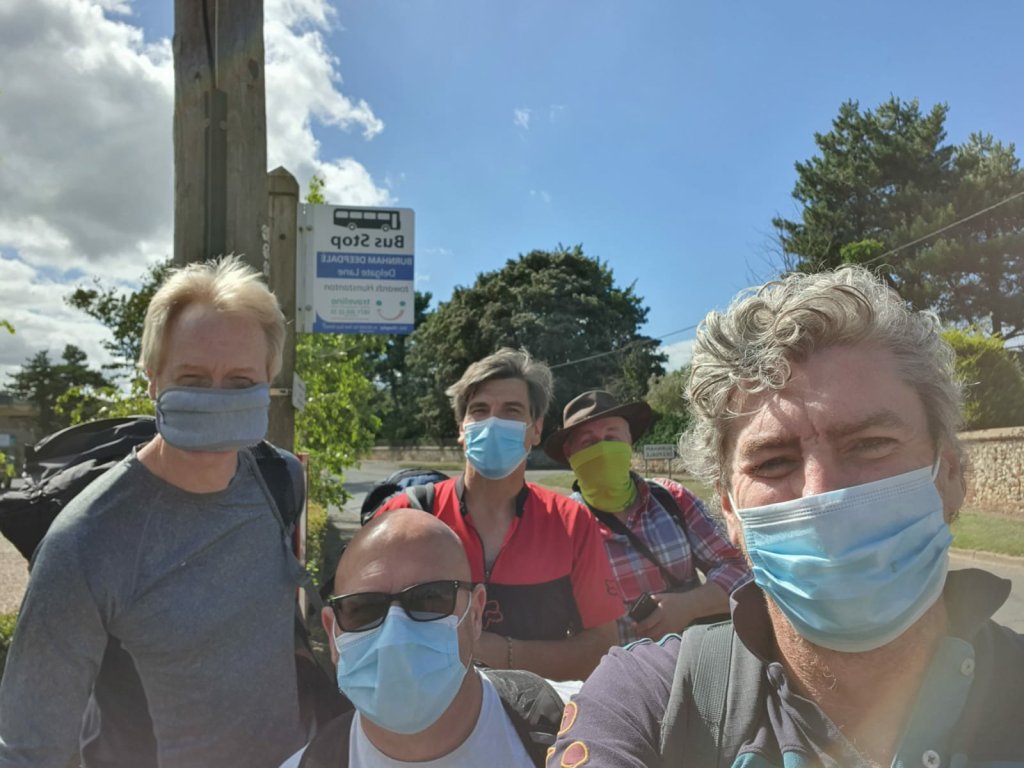
We parked in Wells town and caught the bus to Burnham Deepdale (where we ended the last leg). Face masks all round and glasses steaming up whilst drinking my take-out coffee from Wells Deli.
The Gentleman’s Film & Leisure Club strike-out again. Thanks for all the photos, Gents.
Again, really strong winds blowing us along as we walked the raised pathway which doubles as a sea defence. Flanked either side by the most amazing natural habitats for flora and fauna.
Such a variety of birds seen in this first third of the walk. Lapwings, Curlew, Black-headed Gulls, Reed Bunting, Cormorant, Little Egret, Oystercatchers, Kestrel. Fantastic.
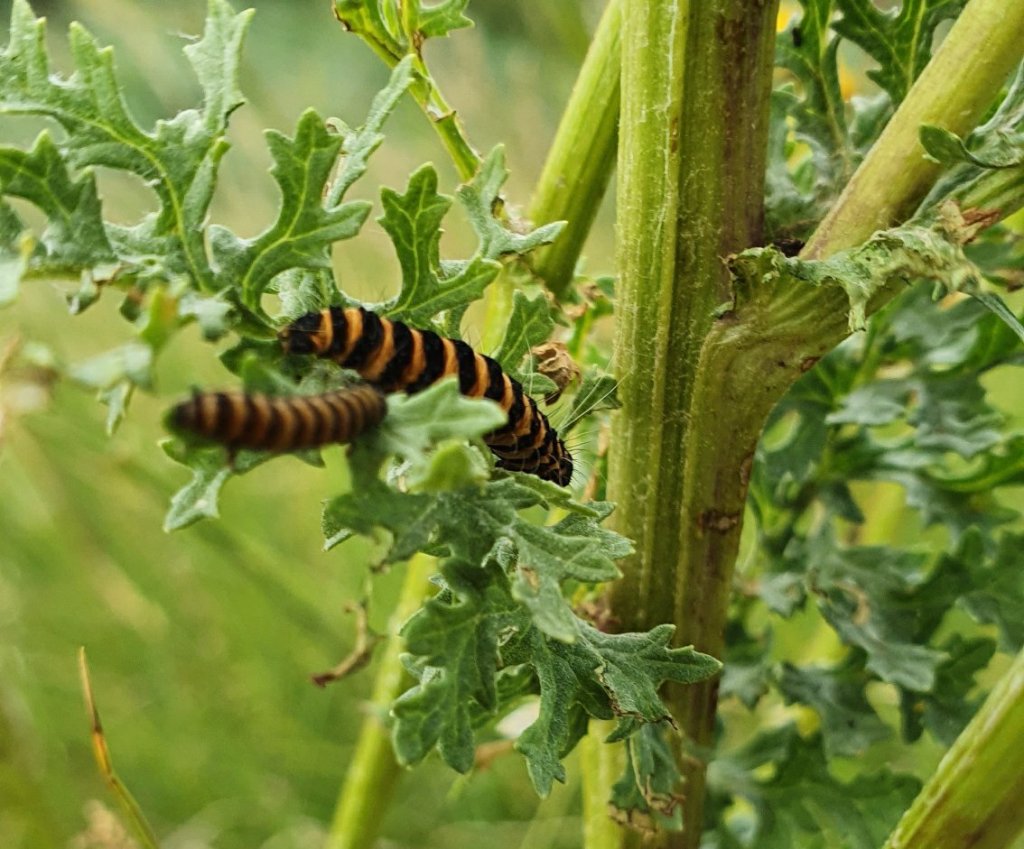
The Cinnabar (Tyria Jacobaeae) feeds mainly on Ragwort. What a great name? We saw the butterfly form on last weeks walk.
We passed a couple of fellas with half-filled white straw sacks over their shoulders. We asked what they were collecting in among the grassy flats. “Sam-fur”, came the reply. Samphire (Salicornia Europea) grows well on the Norfolk coast and is hand picked to add a certain goût de la mer to salads or just on it’s own. Historically, it was also known as Glasswort due to it’s use in 16-century glass production. It was, and still is, also used in soap.
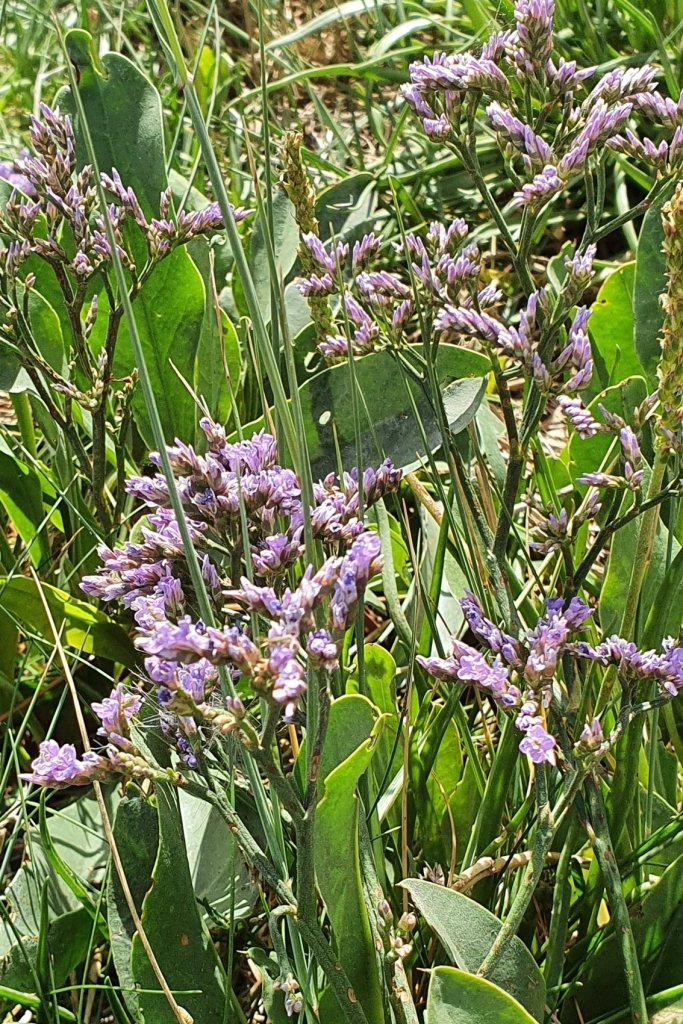
Sea Lavender (Limonium vulgar) grows in abundance on the pathways alongside the tidal saltwater channels.
The blustery conditions really stirred things up. Lapwings strained every taught muscle in their wings and tail to dance their mid-air ballet. The energy-gauge of a kestrel emptied rapidly as he faced head-long into the forty mile an hour wind. Trying to keep a steady view on the grassland below looking for mice and voles along the channel banks.
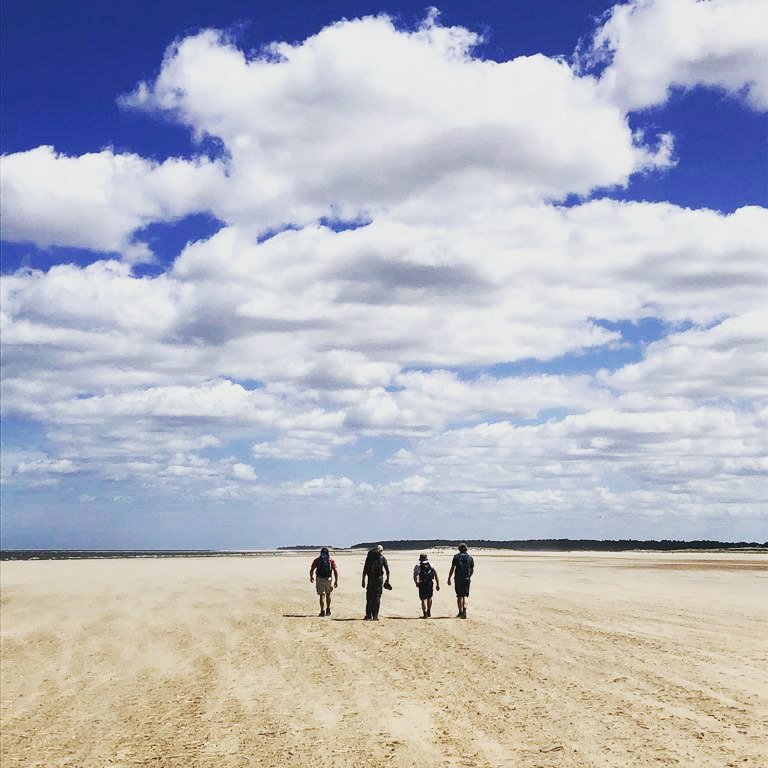
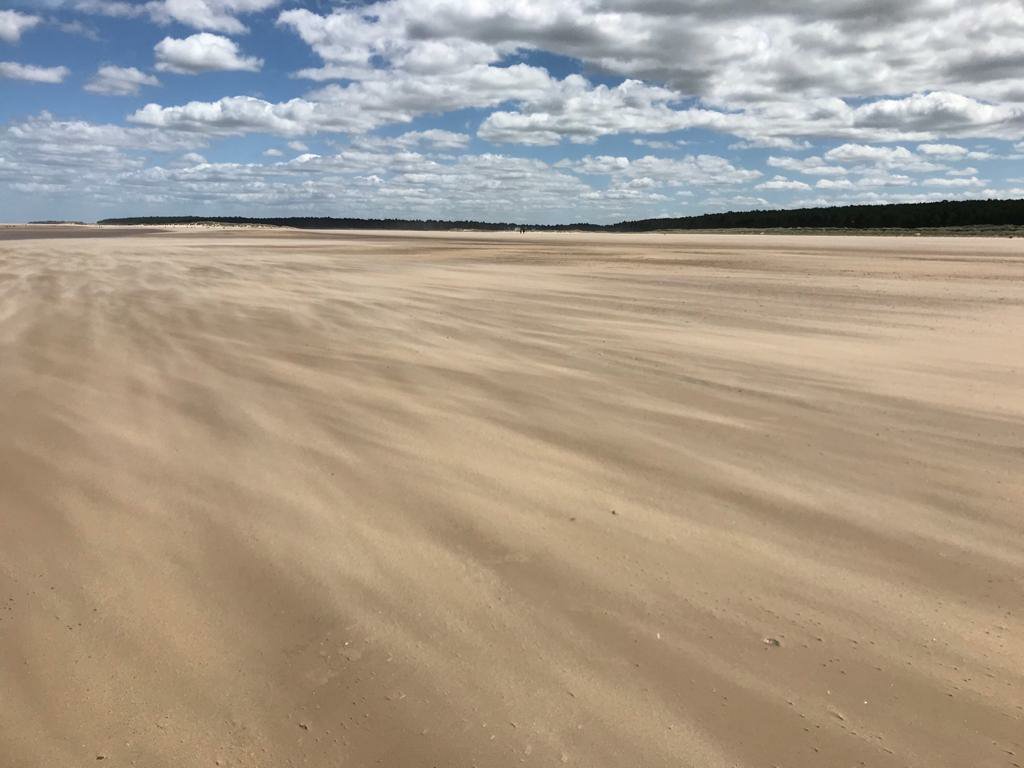
Walking onto the beach and toward Holkham Gap we crunched razorshells underfoot and had the backs of our legs sandblasted. The whispy clouds of sand drifted across each other like sidewinder snakes. As I walked over and through them, my balance was shaken, making me feel a little sea-sick.
Whispy sand-snakes criss-cross each other making the beach seem almost fluid. The sunshine creating highlights above the slightly darker, stationary sand underneath.
Then, we moved into the pine woods, where the wind effect drops and the warmth of the sun becomes more obvious. We stop for food and chat nonsense and talk about other things not quite so important. Butterflies flit and spin and I watch a pair of Pied Wagtails bob and tilt with beaks overflowing with insects. Hurriedly darting to a nest nearby.
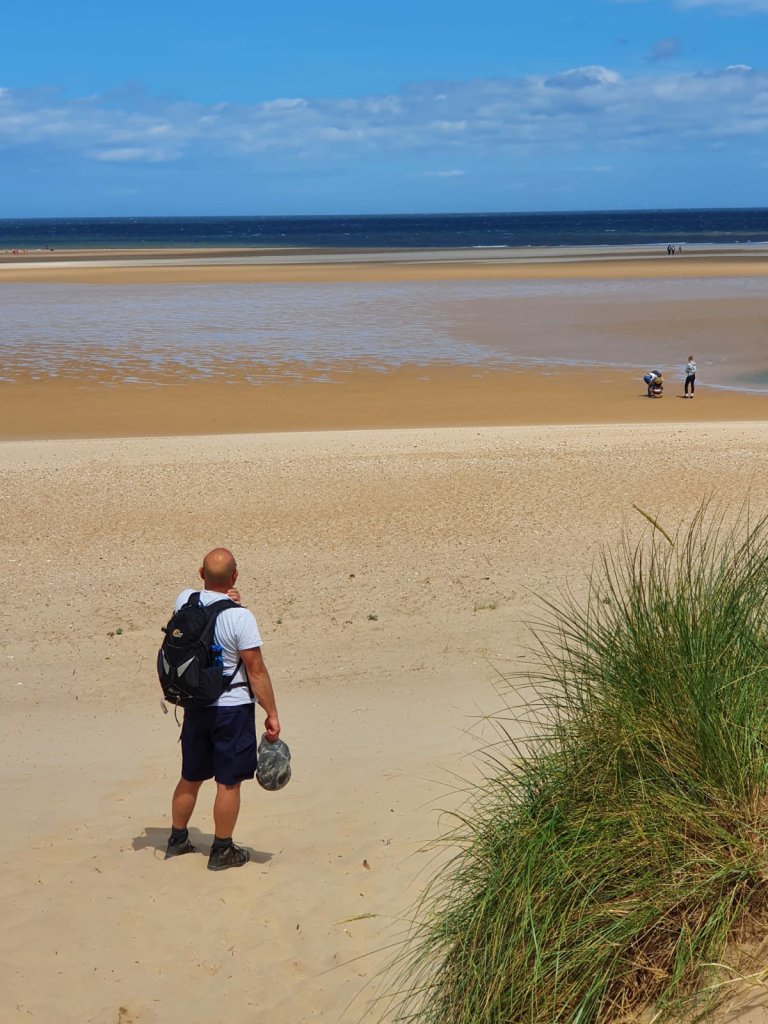
The one-mile path from beach to town.
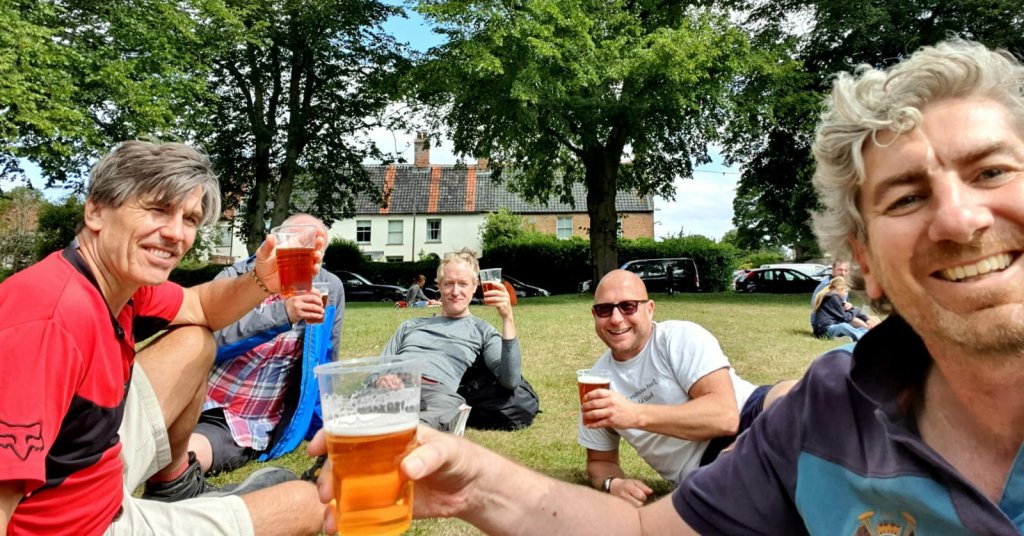
Finally, we emerge at the beach end of Beach Road and walk the final mile straight to Wells harbour and the car park where our journey began. But, just time for a pint or two of Wherry at The Globe on the Buttlands. Laid back in the sunshine, head on my rucksack, dozing. What a day.
The Gentleman’s Film and Leisure Club. ‘Normal service is resumed’ now that the pubs have reopened this weekend.
It’s been almost autumnal today. If it wasn’t for the 19°c temperature, the wind and drizzle-ready grey skies created a backdrop more like November.
Me and Stan have been chatting about evolution during our walks. I confess that I have not read up enough of the science behind this. I tend to spend most of my time thinking about the clear common-sense of it all; whilst also finding it difficult to comprehend the mind-mushing fantastical magic of it.
He explained very clearly how species survive through genetical anomalies which, accidentally I guess, ensure a species thrives. Those that plod along, following their standard genetic code, can (if threatened) eventually get wiped out. All evolutionary change is driven by a single need – to survive.
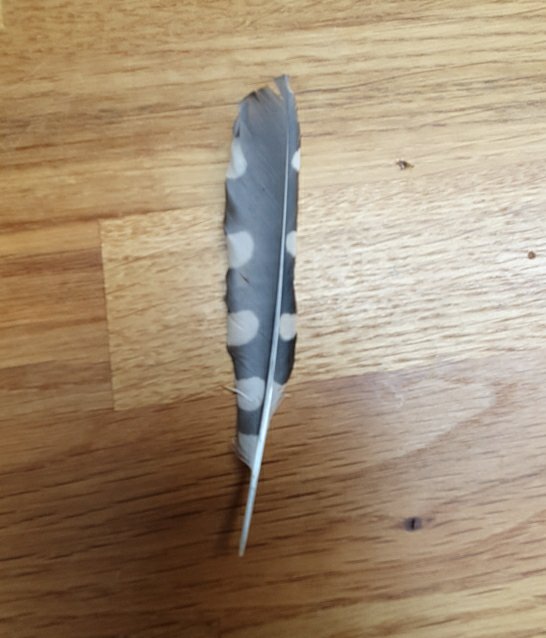
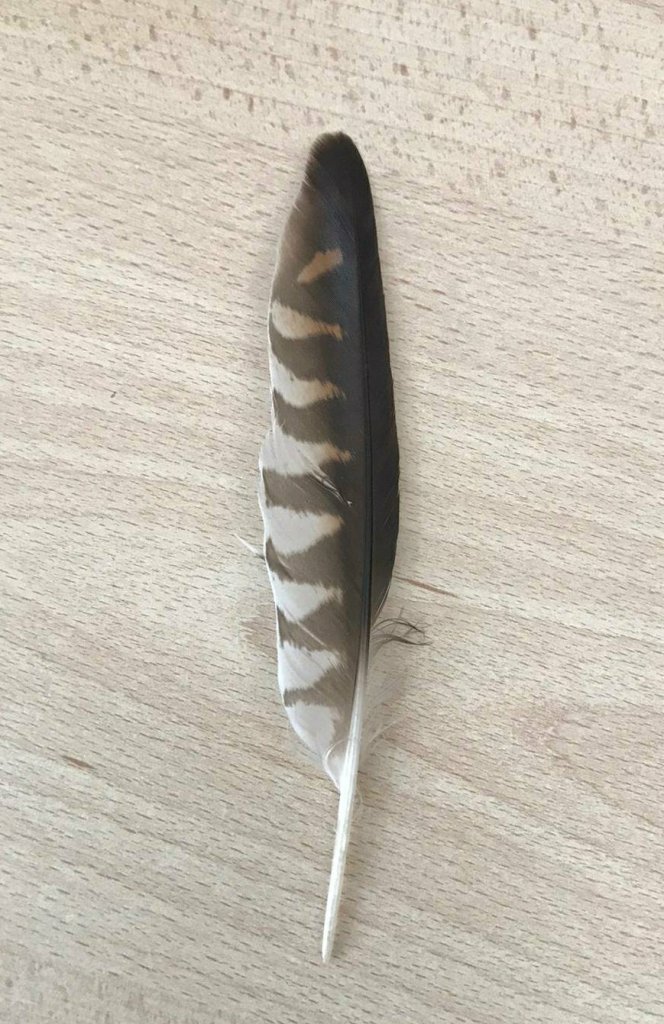
The feather of a Great Spotted Woodpecker. Found by my next door neighbour in her back garden.
Let’s take the Great Spotted Woodpecker as an example. As a species it has evolved a unique skull composition. It’s a spongy, softer material that means that the rapid, hammering of the bill against the tree trunk doesn’t damage the brain. It’s very long tongue not only allows it to seek out insects from inside bark crevises; it is also ‘wrapped’ around the skull to provide even more padding to absorb wood-pecking shock.
The reason for this adaptation? To get the juiciest insects, to attract the best mate, to build the safest nest? Well, all of the above really.
The red patch at the back of the head distinguishes the male from the female. Yet another handy adaptation, I guess. A genetic mutation that possibly occurred once, proved successful in attracting a mate, and in turn, got passed on generationally. And on, and on. Possibly to the detriment of the males with no red patch?
More on genetics and evolution to come. I love doing this blog, I am learning so much from my kids!
I’ve actually got so much to write about at the moment that I am creating drafts for the next few days.
A lovely off-shoot about writing this blog, is when you ‘bump’ into someone that has read a day or two and it provides an opportunity to ‘talk nature’. You start talking about the natural world generally but soon the conversation becomes more specific. Because anyone with an interest in nature usually has something particular that tickles them. But with some people, and I would have included myself here, it tends to be a little secret to keep to ourselves. Only when we come across someone else in the ‘secret society’ do we feel comfortable opening up.
I feel there are three types of people who have a passion for nature. Those who want to tell you no matter what. Those that are almost embarrassed to talk about their love because they feel others would not be interested. And then there are those that would prefer to keep it to themselves as a kind of protection, to separate themselves from the human world. All are wonderful, all are wise.
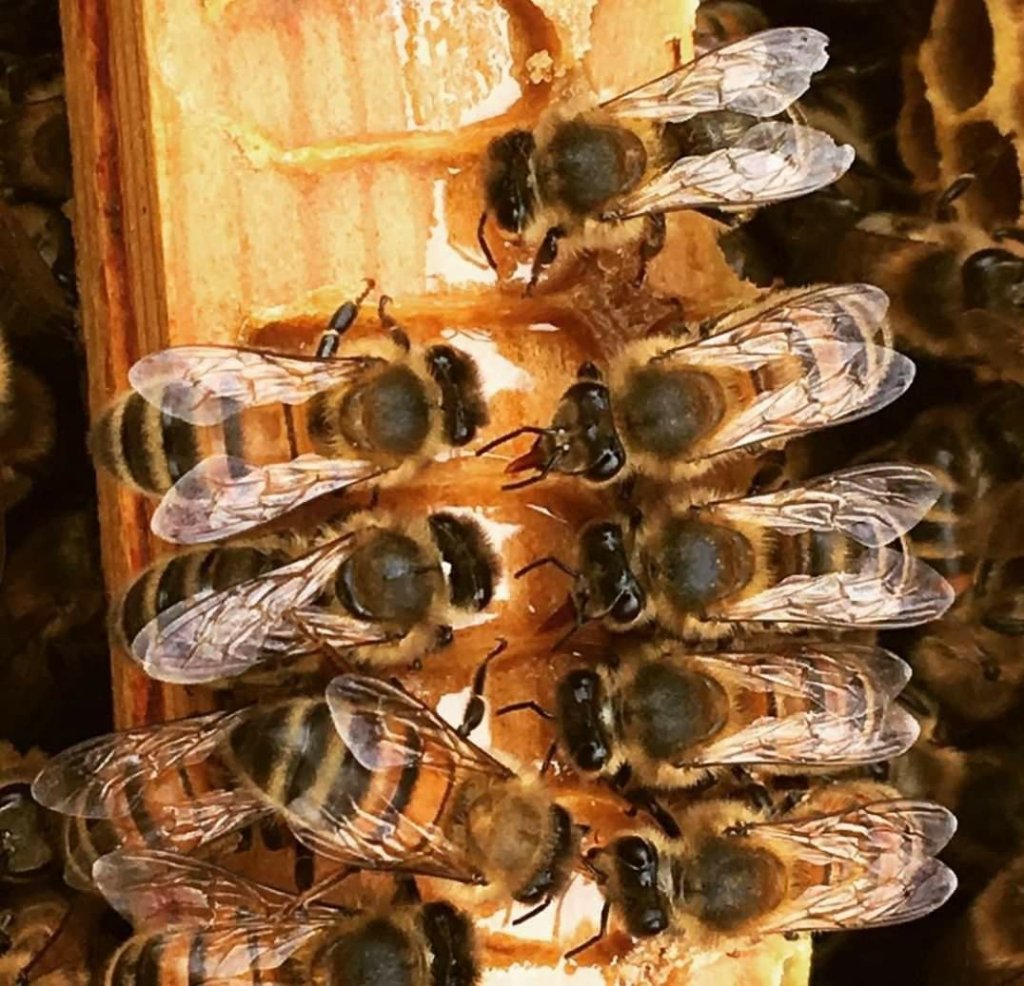
Jo’s bees.
I spent a wonderful half-hour, towards the end of today, talking with a colleague at work. She has a beehive and has been keeping bees for a few years now. The smile on her face when talking to me and her passion for her hobby was infectious. She told me about rescuing swarms from neighbours gardens, and hibernating her colonies in the winter. Also about the regular stings she gets, and how there is nothing more painful than a bee-sting on the knee cap. (She’ll probably be reading this so I really hope I haven’t embarrassed her.)
When you have embraced what the natural world can offer, it truly enhances your life. We all know the good it can do to our mental and physical health. But if you can find that special interest, that one thing that sparks real joy, well, you feel kind of blessed. No wonder some people are reluctant to talk about it. It’s special, sacred almost, and you don’t want it to be tarnished by others knowing. So, you keep it hidden in a box, opening it only when someone with a big heart and an equally genuine love of nature comes by.
Strangers become friends when they share their particular, special love of nature with you. Birds, bees, trees, it doesn’t matter if you share the same interest. The point is they’re trusting you. They’ve given a bit of themselves away, opened themselves up. Made themselves vulnerable.
My friend at work found this Kestrel feather on the school grounds near to where we both see them each day. There are three there now, possibly an adult pair and a juvenile? I love finding (or receiving) feathers. This is the first of a few to add to posts over the coming days. It has become the most precious object that I own (thanks Phil).
I would start these mid-week posts with a certain dread thinking that I wouldn’t have enough to talk about. Get up, go to work, come home, go for a walk, go to bed. But I have to remind myself that this is a blog for me.
During the week it’s usually only the evening walk that I want to write about. It’s the observations and thoughts that occur during the one hour stroll with Mabel and the family that I want to read about in the future.
Lots of butterflies around today. This Large Skipper (Ochlodes venatus) is often mistaken for a moth. It has a very clumsy resting state, with oddly angled wings.
I have learnt so much about myself in this past couple of years. It’s like these past few months have enabled me to consolidate this understanding.
I am generally very happy with who I am and that comes from knowing what makes me truly happy. I have to battle off the invaders of wanting to live in a bigger house, have some land, go on long distance holidays and not have to watch the bank account towards the end of the month. But I know that those are all fundamentally related to wanting more money. When I realise that, I feel guilty. And a bit shallow.
So, actually, this has been quite a pleasing post. Ditch the midweek wants and wishing-I-had’s. Instead be happy with what I already have. A shelter, food to eat, and a loving family.
Today was the first day that I found myself getting frustrated behind the steering wheel of my car.
Driving to and from work is still not as busy as before the lockdown but it’s getting there. I don’t know what I am most frustrated with; the aggressive driving of others, the fact that I am getting frustrated myself or simply because we are returning to the ways of before?
It’s becoming a daily occurrence to see those kestrels at the end of each day when I head to the car park. They are so different, so unlike other birds. That flash of nutmeg-tan on the wings and backs grabs my attention. You normally see the underside of these birds as they hover over fields and roadsides, hunting out prey.
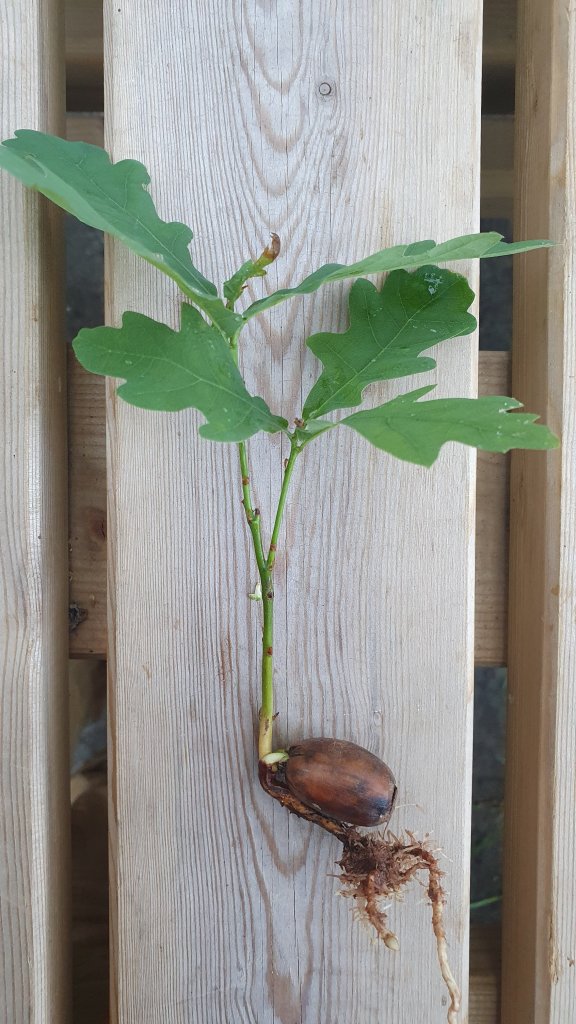
I pulled this sprouting acorn from the gravel in the front drive. I thought the stem would shoot from one end and the roots from the other. There you go, another new thing learnt!
It rained a heavy shower before we went walking this evening. The smells are no longer fresh and clean. There is now a damp, musty scent as the rain lays on the died-back spring foliage and rapeseed crops waiting to be harvested.
A flight of swallows have now appeared over our house. Feeding on the wing as they hoover up all of the flying invertebrates that are in the air. I can’t help but feel they know we like birds at our house so have chosen our garden to carry out their supper-time aerial glide.
It’s Adora’s 16th birthday today and although me and Lisa have been at work, she has had a lovely day. She wanted a dress-maker’s dummy and was made up with the one we got her along with a basket of vintage threads.
More presents this evening followed by take away Turkish food and an evening walk. Her Grandad and Grandma came round, so did Bar. Her two best friends surprised her earlier by bringing lunch.
My brother recommended a recent episode of the BBC Radio 3 programme, Private Passions. It’s great when he sends me little items that he knows will interest me. The guest this week was the author Helen Macdonald. She wrote ‘H is for Hawk’, part chronicle of bereavement, part record of falconry, it’s quite an incredible book.
The sun just peeked through late this evening to cast golden light across the barley fields.
The programme itself has guests name their classical ‘desert island discs’ and the personal reasons for selecting them. In her new book she refers to a special audio cassette from her youth as being a ‘numinous ordinary’ object. On it she had recorded a symphony by Sibelius that had inadvertently captured crackles from an electrical storm that was happening at the same time.
Nature had invaded a piece of perfection in the symphony but had added something almost spiritual to it at the same time. Alongside the dramatic, unwanted and savage time in her personal life came this special object with music and sound that resonated with her. It made that cassette a divine and ordinary object.
I love that term, numinous ordinary. With a hundred days under my belt now, I understand why I am writing these posts to myself. I am looking for those numinous-ordinary objects or moments that constantly happen all around me, every day. I often don’t see them, though I am getting better.
It’s about putting the rays of late evening sunshine spilling on to the barley field with the simple act of walking with the most precious people in my life. Add the precise temperature and smells in the air at that moment. Then juxtapose it all with the various occurrences of the day, good and bad. Putting all of that together, right there, right then – that’s the numinous ordinary.
Now that I understand that. Now it all makes sense to me. Bringing those sensory factors and layers of thought together. I realise that I am a very, very lucky man.
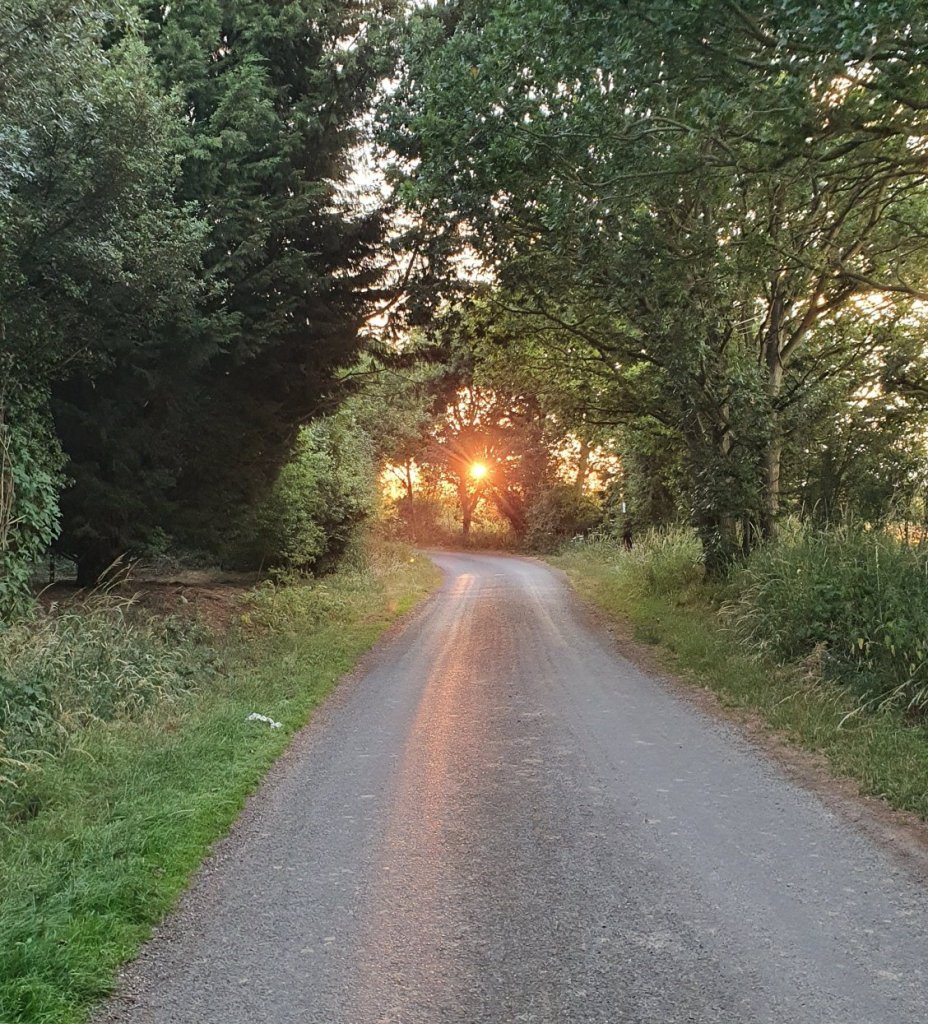
The lane that leads back home and into the evening sun.
Another Monday started nursing blisters from the walk the day before. I bought these new, leather walking boots as a birthday treat but they have been a nightmare. I’ve tried two different pairs of insoles but both have led to some pain one way or another. Next week, I am going to wear my old (very worn) ones or a pair of trainers.
Be afraid, be very afraid.
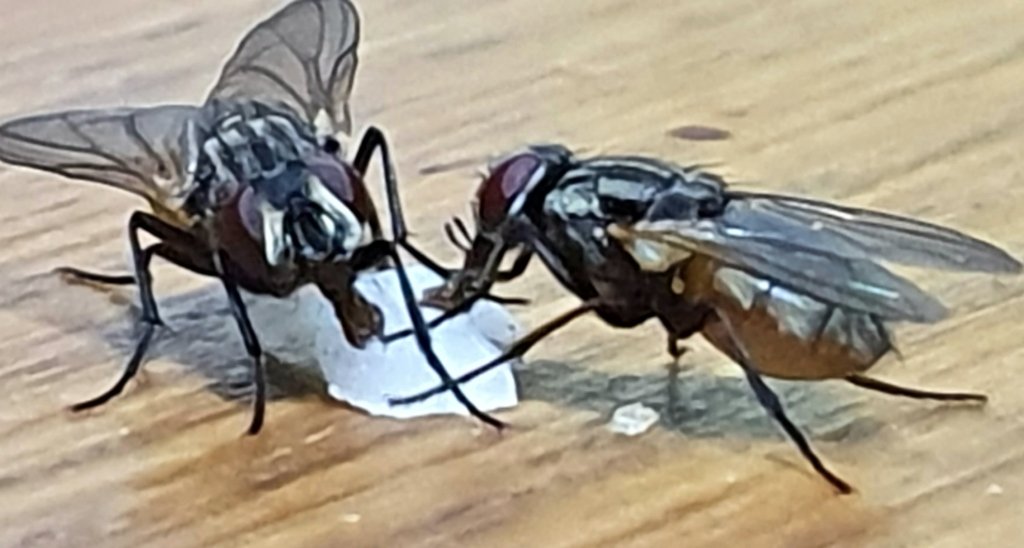
I watched a pair of flies feeding on a flake of bun icing last night. There I’ve been, cursing my phone camera and how, to be able to do this blog justice I needed a better one. Then, this picture happens.
But of course, I was at work in Heybridge today. That place seems to remind me everyday that it’s an ornithological hotspot. Driving in a Buzzard drifted over my car with the wind. Then, at the end of the day, walking to the car park (again), I saw the Kestrel. Two this time, together, on the freshly cut grass.
I try to edge closer to get a better picture using my phone, but they see me and startle. A small stoop, a dip of the head and they launch. Stretching those wings out, straining them against the air, up and down. Gaining pace whilst low to the ground, then tilt their tales, angle their wings, and use the speed to curve up into two different trees.
The news today had the title ‘Coronavirus Leicester’ as they reinstate lockdown measures for the city. The government also announced a billion pounds to invest in school buildings. Closer to home, Adora has made her own birthday cake; three layers and butter icing. We’re going to need to watch those flies.


 The Bald Birder